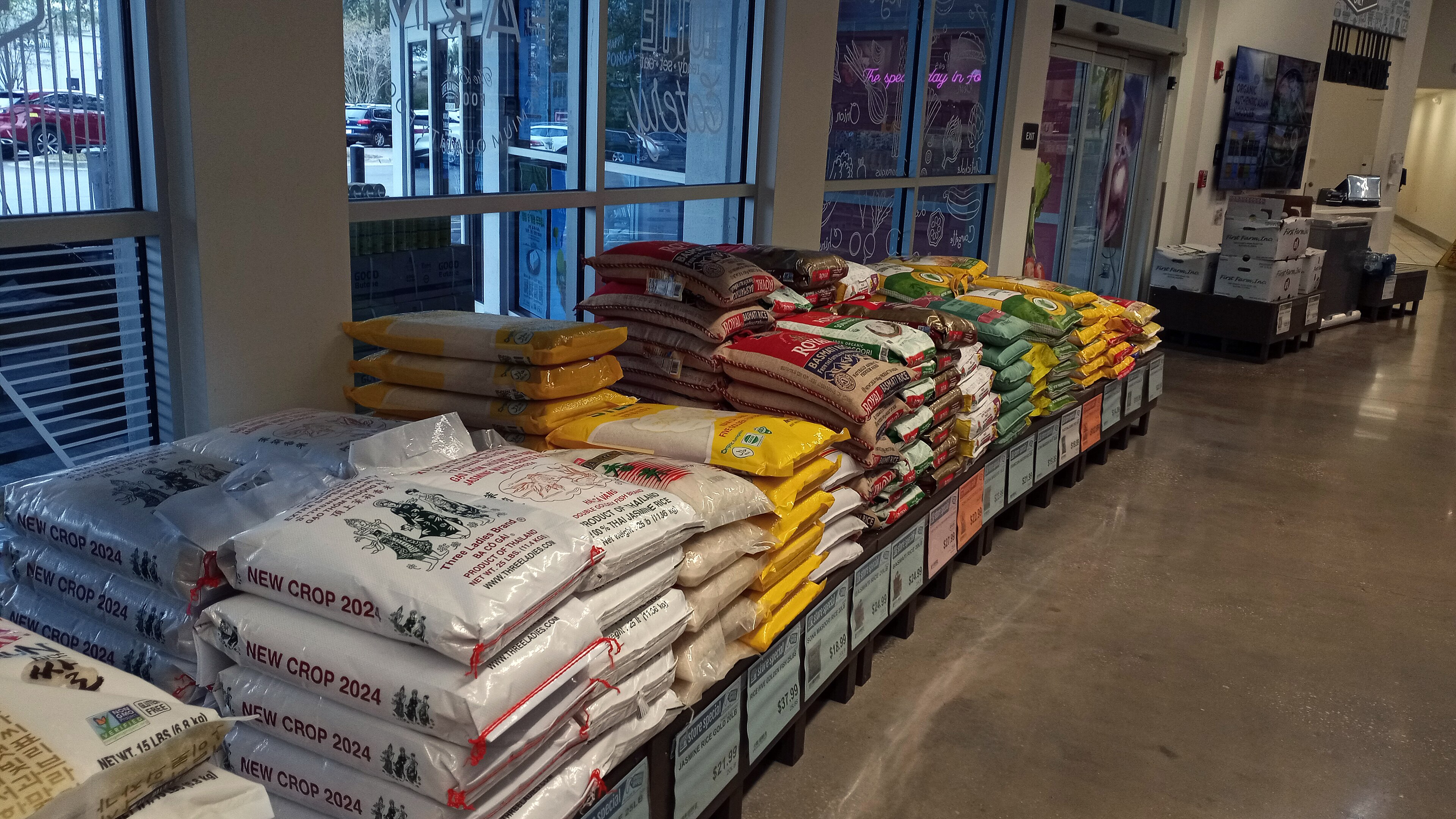
Imported rice moved in the opposite direction to beans in the week of June 1, easing at both markets rather than climbing. A 50kg bag of imported short grain was recorded at ₦58,000 at Lekki-Jakande Market and ₦60,000 at Ajah Market, a same-week gap of ₦2,000 in Lekki-Jakande's favour.
Both Markets Eased From March
At Lekki-Jakande, the short grain bag slipped from ₦60,000 in the week of March 16, down 3.3%, while at Ajah it fell from ₦63,000 over the same span, down 4.8%. Imported long grain went the other way at Lekki-Jakande, a 50kg bag firming to ₦60,000 from ₦56,500 in the week of January 26, up 6.2%. Long grain was not captured at Ajah in June, so no same-week comparison is possible for that grade.
A Premium Import Arrives at Ajah
Ajah added a premium line in June, with Aani Golden Sella basmati first captured at ₦21,000 for a 5kg pack and ₦11,500 for a 2kg pack. Basmati buyers tend to purchase in small packs for special meals rather than by the bag, so these readings give the eastern corridor its own premium reference point rather than a bag-level comparison.
Against the Rest of Lagos
Imported short grain has the widest spread in the file, which makes the dated backdrop instructive. When other markets were last captured, a 50kg bag ran from ₦52,000 at Mojoda in late January to ₦75,000 at Ketu in the same period, with the March and April readings at Agege, Ayobo, Ikotun and Ipaja clustering around ₦54,000 to ₦56,000, and Oshodi and Iyana Ipaja higher at ₦65,000 and ₦60,000 in April. The June figures at Ajah and Lekki-Jakande sit squarely in the upper-middle of that historical range.
The Bigger Picture
Imported rice prices sit close to the exchange rate the CBN monitors, since the stock is brought in and repriced as the naira moves, while the USDA estimates the import and milling balance for Nigeria. The easing at both markets, against a firm beans market, suggests steadier rice supply rather than fresh demand pressure. Buyers can line up brands on the grain price index.
Live prices: Lekki-Jakande Market and Ajah Market.