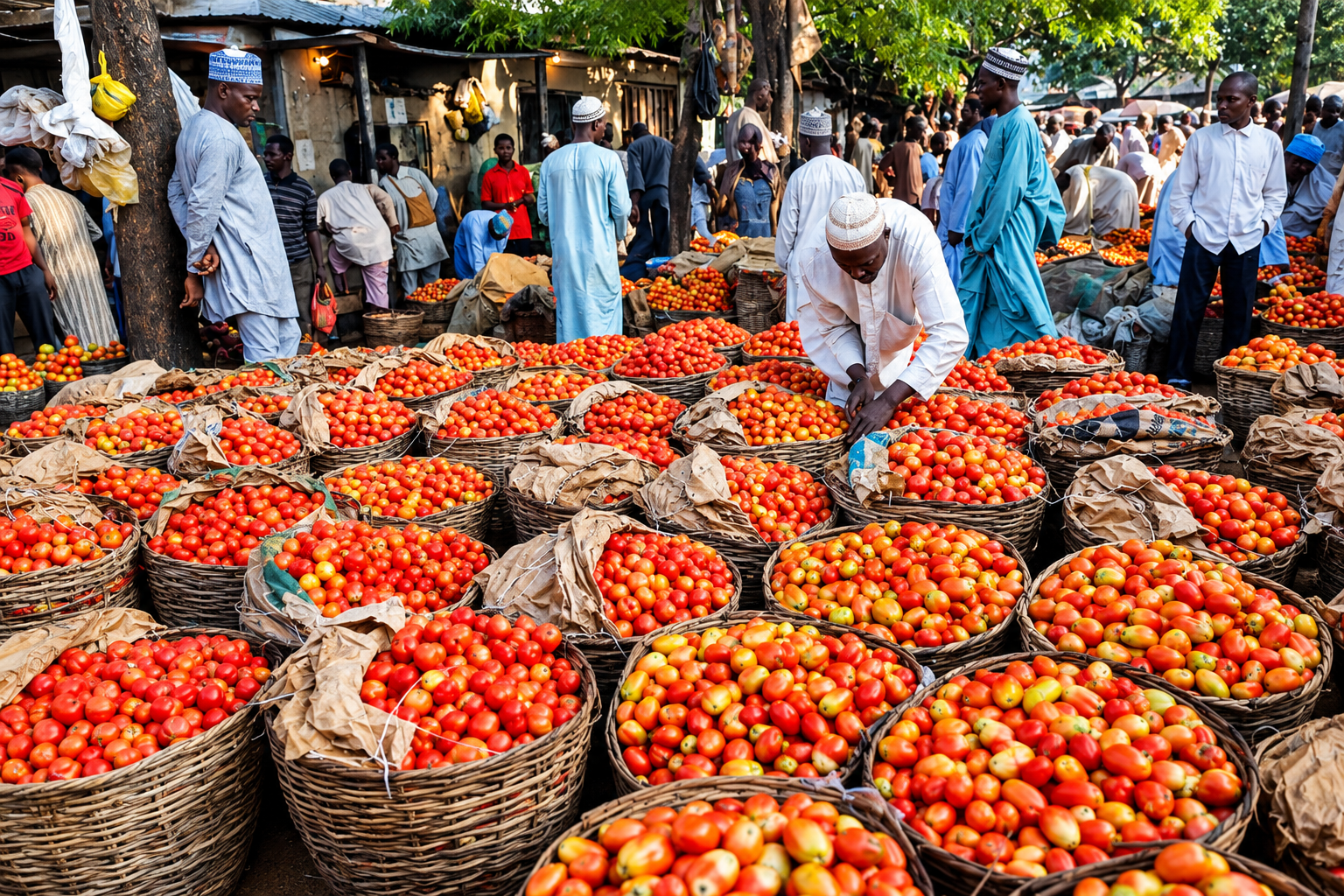
For the first time in half a year, the pace of food price increases in Nigeria has slowed. Food inflation fell to 19.57 per cent year-on-year in August 2026, down from 20.31 per cent in July, marking the first decline in six months and ending five straight months of increases, according to the National Bureau of Statistics as reported by Nairametrics.
A Turn After Months of Climbing
The reversal interrupts a steady climb that ran through most of the year, with food inflation rising from 8.89 per cent in January to 12.12 per cent in February, 14.31 per cent in March, 16.06 per cent in April, 16.96 per cent in May, 17.52 per cent in June and 20.31 per cent in July before easing in August, Nairametrics reported. The August figure was also well below the 25.30 per cent recorded a year earlier, according to TVC News.
The Monthly Picture Tells the Sharper Story
The clearest sign of relief came in the month-on-month data. Food inflation slowed to 1.02 per cent in August from 5.56 per cent in July, a fall of 4.55 percentage points, which the NBS said shows that average food prices are now rising at a decreasing rate, according to TVC News. Headline inflation also eased, dipping to 15.39 per cent from 15.43 per cent in July, according to Legit.ng.
What Got Cheaper, and Where
The bureau attributed the slowdown mainly to price changes in palm oil, carrots, pepper, onions, cassava flour, beef, yam flour, water yam, melon, fresh ginger, fresh fish, Irish potatoes, wheat grain and frozen poultry, according to Nairametrics. The relief was uneven across the country. Food inflation was highest in Adamawa at 38.85 per cent, Zamfara at 37.96 per cent and Bayelsa at 36.20 per cent, while Borno posted negative food inflation of minus 4.04 per cent, with Jigawa and Kebbi also among the lowest, according to Legit.ng.
Harvest, Not Policy
Analysts tied the easing less to policy than to the calendar. The moderation suggests that increased availability of locally produced staples such as grains, vegetables and tubers is beginning to provide relief as the main harvest season takes off, though prices remain far higher than a year earlier, according to Arbiterz. Whether the trend holds will depend on transport costs, insecurity in farming areas and the strength of the rest of the harvest.
Food inflation remains one of the biggest pressures on Nigerian households. FoodPrices Nigeria tracks verified retail prices across Lagos markets, the street-level check on whether a softer national number is reaching the shopping basket.