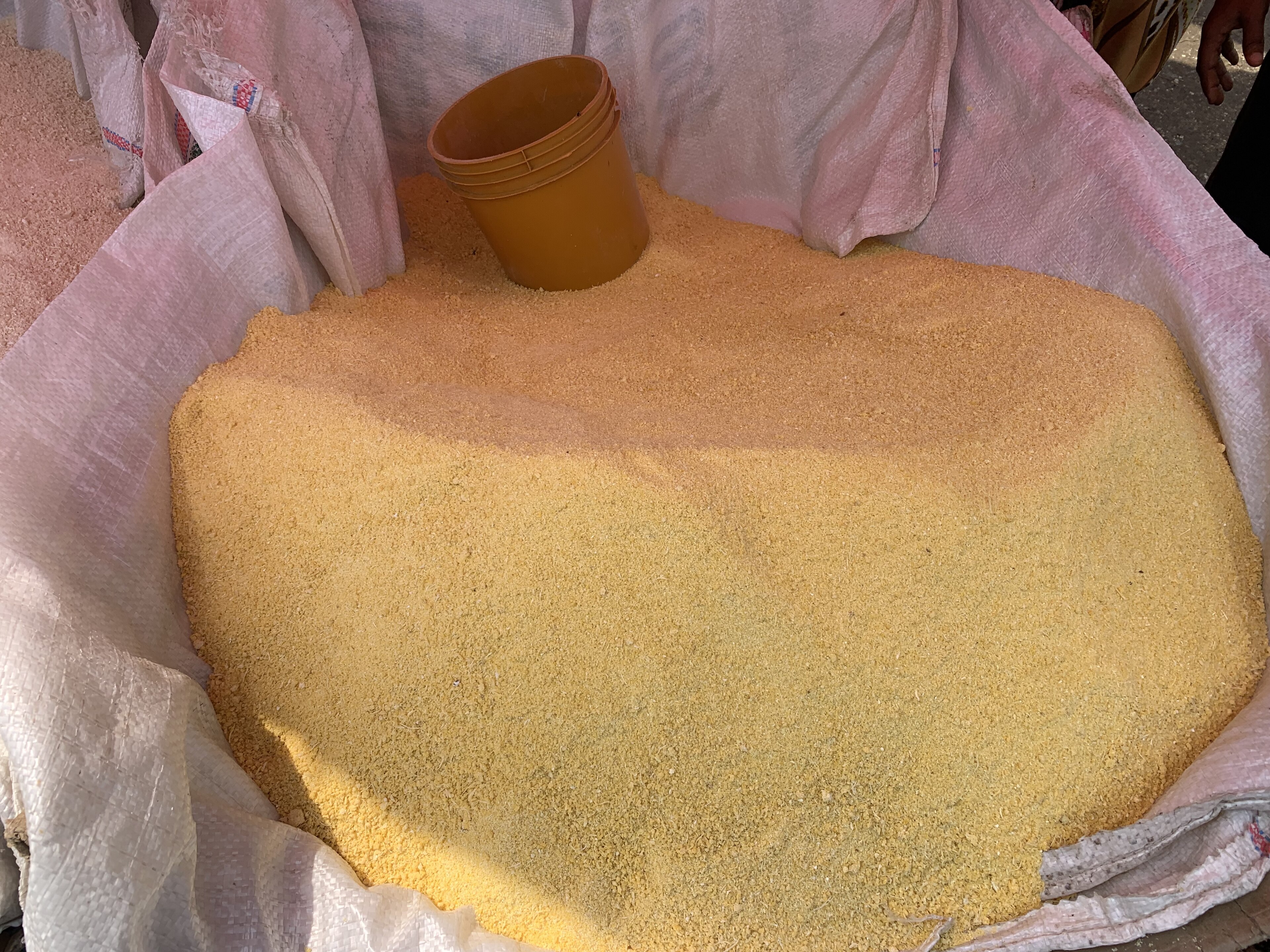
Yellow garri is climbing again in Lagos, though it remains well below where it started the year. The Ministry of Agriculture and Food Systems market survey for the week of 17 July 2026 puts Garri (Yellow) at a Lagos average of ₦1,505 per paint across ten reporting markets. That is 2.7% above the prior survey figure of ₦1,465 and 12.7% above the ₦1,335 recorded four weeks ago, while sitting 23.8% below the ₦1,975 average of 9 January.
From ₦1,000 to ₦2,000 Across the Same City
Mile 12 Market holds the cheapest quote at ₦1,000, which is 33.6% below the Lagos average. Fresh Food Hub Mushin follows at ₦1,200 and Oyingbo Market at ₦1,300. A three way tie at ₦1,500 covers Sabo Market Yaba, Agbalata Market and Mushin Market, while Agege Market and Ile-Epo Market both quote ₦1,600. Epe Main Market sits at ₦1,850 and Ajah Market tops the table at ₦2,000, exactly double the cheapest quote and 32.9% above the citywide average.
Garri Is Named in the National Inflation Data
The Lagos climb is part of a national pattern. The National Bureau of Statistics listed garri and cassava flour among the items that drove food inflation higher in June, as reported by Vanguard, while Nairametrics recorded food inflation at 17.52% year on year against a headline rate of 15.91%. Pulse Nigeria framed the divergence plainly, noting that the cost of feeding a household rose faster last month than the general cost of living.
Rain in the Cassava Belt
Garri starts as cassava, and cassava farms close to Lagos have taken damage this season. AgroNigeria reported cassava, maize and vegetable farms in Ikorodu, Ojo, Imota and Epe submerged for days after sustained rainfall, with growers unsure whether they can fund another planting cycle. Vanguard reported flood warnings covering about 17 states between 21 and 27 July, and a vegetable farmer in Epe describing the loss of an entire farmland investment in June. Root crops are the specific exposure, as CNBC Africa reported in April, since flooding of cultivated land in a country dependent on cassava and yam feeds directly into market supply. Tribune reported NiMet warnings of flooding risk across 27 states alongside World Food Programme concerns about the months ahead.
Why Yellow Costs More Than White
Yellow garri is fried with palm oil, which gives it both its colour and a second cost input. Palm oil duties were revised this year under the 2026 Fiscal Policy Measures, with ThisDay reporting crude palm oil moving to an effective rate of 28.75% from 35%. The grade premium shows up clearly in the survey. Garri (White) averaged ₦1,267 per paint this week and Garri (Ijebu) ₦1,260, which places yellow garri 18.8% above the white grade and 19.4% above the Ijebu grade for the same measure.
What the Spread Costs a Household
Ajah Market is the only market on the Ajah and Lekki axis with a Garri (Yellow) price this week, and its ₦2,000 sits 38% above the mainland average of ₦1,450. Nigeria's minimum wage is ₦70,000 a month, so buying at Mile 12 Market rather than Ajah Market saves ₦1,000 per paint, or 1.4% of that wage. A household switching from yellow garri at the Lagos average to white garri at the cheapest verified quote in the city would move from ₦1,505 to ₦1,000, a 33.6% cut on a single line of the food budget.
What the Data Signals for Buyers
The two readings in this week's garri data point in opposite directions and both are true. Anyone comparing today with January is buying 23.8% cheaper. Anyone comparing today with four weeks ago is paying 12.7% more. The month on month climb is the live signal, since it has run through three consecutive surveys while the January comparison reflects a peak that has already passed. Against that, the ₦1,000 spread between Mile 12 and Ajah remains larger than any move the average has made all year.
FoodPrices Nigeria will keep tracking the garri grades market by market as the rainy season plays out. Live prices: foodprices.ng/real-time-prices