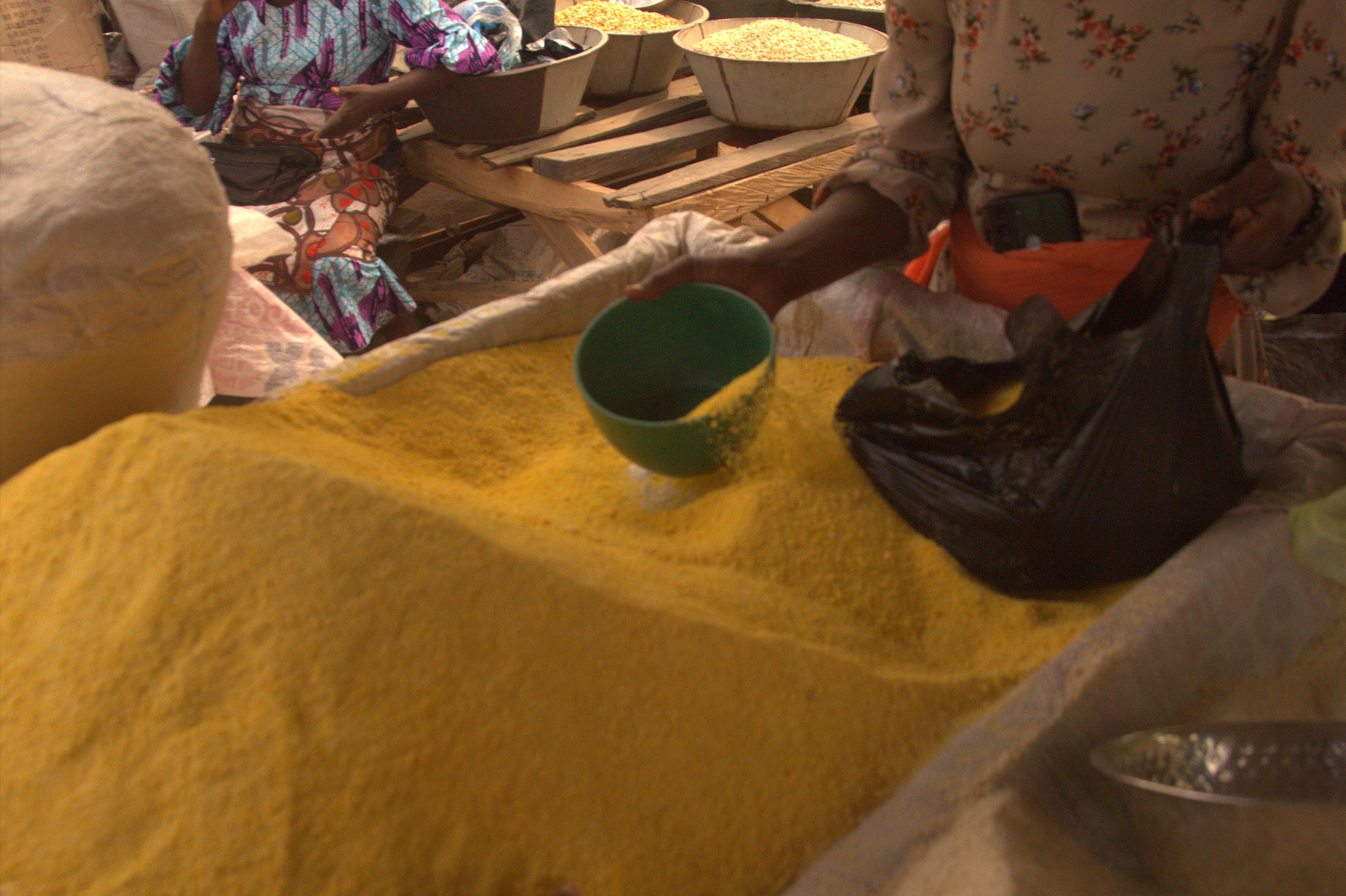
While beans and cooking oil have climbed steeply this year, garri has been the calm staple in the Lagos basket. At Agege Market, a 50kg bag of white garri was recorded at N20,000 in the week of January 19 and at the same N20,000 in the week of April 13, holding flat across the weeks of January 26, February 16 and February 23 in between. For a staple that absorbs much of the food spending in lower-income households, that stability is a meaningful cushion.
Yellow garri at the same market moved a little. A 50kg bag held at N20,000 through late January and February, then printed N23,000 in the week of April 13, a rise of N3,000 or 15.0%. Ijebu garri, the dry, sour-fermented variety, also held at N20,000 per bag across the weeks of January 26, February 16 and February 23. The retail paint bucket of garri at Agege stayed in a tight band around N1,300 to N1,500 through April, which means the household that buys a paint bucket at a time has felt almost none of the pressure that beans buyers have absorbed.
The one place garri firmed more noticeably was Ajah Market. A 50kg bag of white garri there read N26,000 in the week of January 19, dipped to N20,000 through February, then returned to N27,000 by the week of June 1. Yellow garri at Ajah followed a gentler path, holding around N20,000 to N21,000 across the same weeks. Because these readings span different weeks rather than a single seller tracked continuously, they are best read as the market average firming over the period rather than one trader raising a price.
Garri owes its relative calm to its supply chain. It is processed from cassava grown widely across southern Nigeria, so it carries less exposure to the exchange rate and import costs that move branded rice and vegetable oil. The FAO and the NBS both track cassava and processed cassava products as a barometer of local food resilience, and the flat garri line this year is a quiet signal that the domestic side of the food economy is holding even as imported-input staples climb.
For households planning their next big shop, the contrast is the practical takeaway. Buyers can weigh garri against beans and rice on the compare tool and follow live readings at Agege Market and Ajah Market