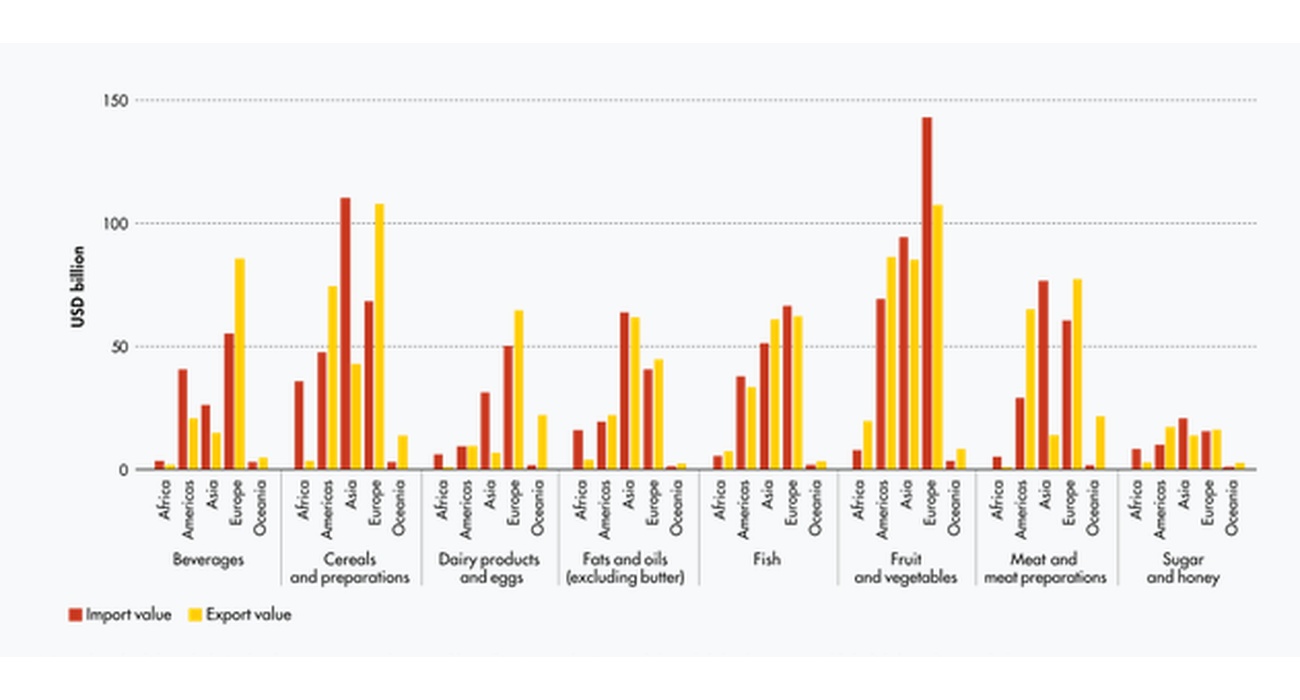
Nigeria spent ₦3.30 trillion on food and beverage imports in the first six months of 2026, according to National Bureau of Statistics trade data analysed by Nairametrics. That is 3.1% below the ₦3.40 trillion spent in the first half of 2025, but the quarterly trend is moving the other way.
A Sharp Second Quarter
Imports cost ₦1.39 trillion in the first quarter and ₦1.91 trillion in the second, an increase of ₦520 billion, or 37.4%, in three months. Nairametrics noted that the rise "cut across both primary and processed food products, with household-oriented imports recording particularly strong growth during the quarter."
What Nigeria Is Buying
Processed food made up the larger share of the half-year bill at ₦1.72 trillion, or 52.1%. Primary products such as unprocessed grains accounted for ₦1.58 trillion.
More than half of the total went straight to the dinner table. Imports for household consumption came to ₦1.75 trillion, made up of ₦934.78 billion in processed food and ₦811.93 billion in primary products, or 52.9% of the bill. The rest, ₦1.55 trillion, went to industry as raw material for millers, brewers and food manufacturers.
A Bill That Keeps Growing
The annual figures show the direction. Nigeria's food import bill reached ₦7.65 trillion in 2025, up 16.3% from ₦6.58 trillion in 2024, Nairametrics reported. The Sun also reported the ₦3.3 trillion half-year figure.
Why It Matters for Prices
Imported food is paid for in foreign currency, so its price in the market follows the exchange rate as much as the harvest. A country that sends ₦3.30 trillion abroad for food in six months is also a country whose staples, from bread flour to sugar and frozen fish, become dearer whenever the naira weakens.
FoodPrices Nigeria tracks both imported and local staples across Lagos markets and will follow how the import bill shows up in shelf prices.