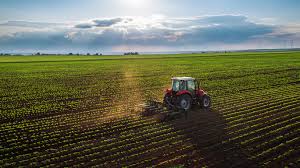
The Federal Government has commenced what officials describe as the largest single agricultural mechanisation programme ever undertaken on the African continent, distributing 2,000 heavy-capacity tractors and over 9,000 precision farming implements to mechanisation service providers across Nigeria.
The programme, known as the Renewed Hope National Agricultural Mechanisation Programme (NAMP), was officially flagged off on Monday at Sheda, Abuja, by the Minister of Agriculture and Food Security, Senator Abubakar Kyari, alongside the Managing Director of the Bank of Agriculture, Mr Ayodeji Sontinrin. The initiative is supported by Heifer International and Heifer Nigeria, and represents a major step in the Federal Government's strategy to close Nigeria's chronic mechanisation gap and boost domestic food production.
According to Leadership, the rollout will be phased, beginning with the deployment of 600 tractors, followed by 750 and then 650 units to reach the full complement of 2,000 mechanisation assets nationwide. Minister Kyari said the programme was designed to end Nigeria's long era of low tractor density and usher in a new phase of food productivity.
The scale of demand underscored just how desperately Nigerian agriculture needs modern equipment. Nairametrics reported that more than 100,000 applications were received during the first phase alone, reflecting what officials described as overwhelming nationwide demand for mechanisation services. The programme attracted thousands of submissions from smallholder farmers, youth agripreneurs, and women-led enterprises across the country.
Crucially, the tractors are not being distributed for private ownership. According to NigerianEye, they will be deployed through certified mechanisation service providers operating under a regulated lease-to-own framework. Each tractor has the capacity to service approximately 600 hectares per year, and collectively, the programme is expected to benefit approximately 1.2 million farmers across more than 1.5 million hectares annually. Many of the service providers are youth- and women-led enterprises, supported by structured financing coordinated by the Bank of Agriculture in partnership with Heifer International.
The Minister of State for Agriculture and Food Security, Senator Aliyu Sabi Abdullahi, provided the context for why this investment is so urgently needed. As reported by AllAfrica, he noted that Nigeria's current mechanisation density stands at just 0.27 tractors per 1,000 hectares — a figure that falls dramatically below the African average of 2.5 and the global average of 3. The intervention, he said, is designed to close this gap and align the country more closely with continental and global standards.
Punch reported that Minister Kyari announced the programme forms part of a broader agricultural financing ecosystem envisioned by President Tinubu. He disclosed that a ₦50 billion catalytic seed fund has been established with the Bank of Industry to unlock agro-industrial investment at scale. For the current wet season alone, ₦250 billion has been mobilised to finance one million smallholder farmers, each cultivating an average of one hectare in 2026, in partnership with state governments.
Each tractor also comes with two years of free service support. According to Leadership, Kyari announced the deployment of 36 mobile service trucks and the construction of seven mega mechanisation service centres strategically placed across the country. The government is also catalysing the establishment of a mega tractor assembly plant capable of producing between 2,000 and 4,000 tractors annually, signalling a move away from import dependency toward domestic industrial capability.
BOA Managing Director Sontinrin, speaking at the flag-off, described the rollout as a historic milestone. According to NAN, Sontinrin said that NAMP goes beyond distributing tractors and aims to build enduring systems that create value across the agricultural chain, especially for millions of smallholder farmers. He urged beneficiaries to treat the equipment as a national trust, maintain their tractors, honour repayment commitments, and build businesses that create jobs and deliver value.
Blueprint reported that the programme also includes specialised implements and structured financing models to ensure long-term economic impact, particularly for youth- and women-led enterprises.
However, Punch also noted that the rollout attracted attention from lawmakers and farmers who had been waiting months for the equipment after the government initially received the first batch of 2,000 Belarus tractors in February 2025. President Tinubu officially launched the tractors in June 2025 under NAMP alongside 9,000 specialised farming implements, but distribution was delayed, highlighting the challenges involved in ensuring equipment reaches farms and is effectively utilised.
At FoodPrices, we see this mechanisation push as one of the most significant policy actions in Nigerian agriculture in recent years. Nigeria's farming sector remains overwhelmingly manual, with smallholders using hand tools and animal-drawn equipment across millions of hectares. If the NAMP programme can deliver on its promise — reaching 1.2 million farmers and cultivating 1.5 million hectares annually through a service-based rather than ownership-based model — it could meaningfully shift the productivity equation that has kept Nigerian agriculture underperforming relative to its enormous potential. The key test, as always, will be execution. Whether these tractors actually reach farms across all six geopolitical zones, whether maintenance infrastructure functions as designed, and whether service providers operate with the professionalism required will determine whether NAMP becomes a genuine turning point or another well-intentioned programme that falls short of its targets. We will be tracking both the deployment and the downstream effects on food production and prices.