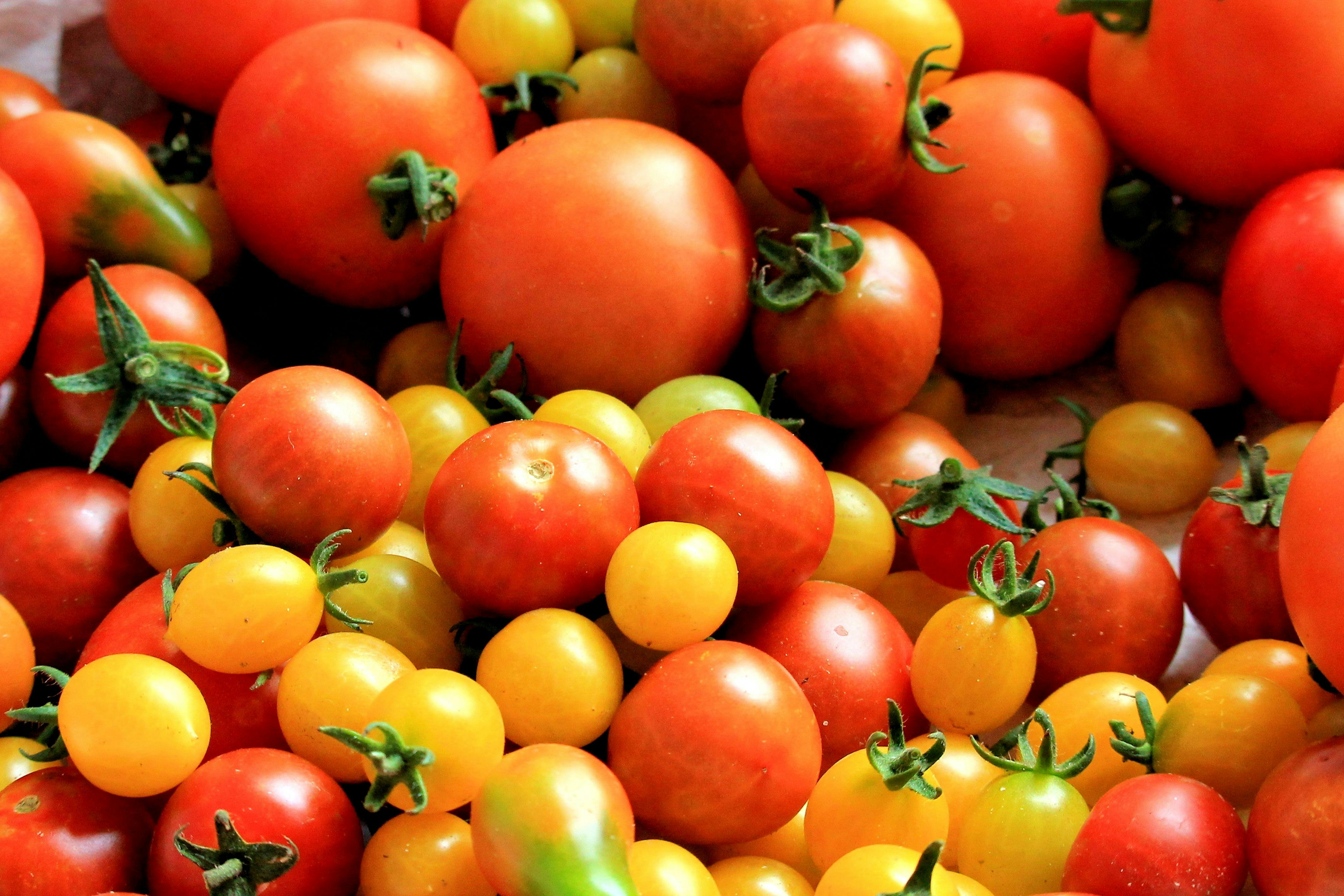
Lagos tomato markets are displaying extraordinary price disparities that could cost consumers up to 150% more depending on where they shop, according to fresh market data spanning 60 days across multiple Lagos markets. The most striking example comes from Tomatoes crates, where Oyingbo Market sells at ₦10,000 while Agege Market charges ₦25,000 — a difference of ₦15,000 or exactly 150% more. These disparities come at a time when Nigeria's food inflation has dropped to 8.89% year-on-year in January 2026 — its first single-digit reading in over 14 years — yet consumers continue to face wildly inconsistent prices depending on where they shop.
The data reveals that Tomatoes paint buckets show an equally dramatic 125% price spread across seven Lagos markets. At Epe Main Market, consumers can purchase a paint bucket of tomatoes for ₦2,000, while Sabo Market Yaba charges ₦4,500 for the identical quantity. This ₦2,500 difference represents substantial savings for budget-conscious households, particularly given that the average price across all markets stands at ₦3,286.
Fresh Tomatoes, tracked as a separate product category, demonstrates more price stability but still shows meaningful variations. Their crates range from ₦12,000 at four markets (Agege, Ikorodu, Ketu, and Mushin) to ₦13,500 at Oshodi Market — a 12.5% premium. Per-kilogram Fresh Tomatoes pricing spans ₦2,500 at Ikorodu Market to ₦3,000 at Oshodi Market, representing a 20% difference that translates to ₦500 per kilogram.
Local Tomatoes command the highest price volatility in the per-kilogram segment, with a 40% spread between the cheapest (₦2,500 at Ikotun Market) and most expensive (₦3,500 at Ojo Market). This ₦1,000 difference per kilogram makes Ikotun Market significantly more attractive for consumers seeking locally-sourced tomatoes, offering savings of ₦10,000 on every 10kg purchase compared to Ojo Market.
Basket pricing reveals another layer of complexity in Lagos' tomato market structure. Regular Tomatoes baskets vary from ₦20,000 at Epe Main Market to ₦30,000 at three locations (Ajah, Jakande, and Oyingbo markets), creating a 50% price gap. Meanwhile, Fresh Tomatoes baskets maintain uniform pricing at ₦27,500 across all five markets surveyed, suggesting either stronger supply chain coordination or different sourcing strategies.
The wholesale segment presents interesting dynamics, with Tomatoes 50kg bags priced at ₦19,500 at Mile 12 Market, translating to ₦390 per kilogram. This wholesale rate significantly undercuts retail prices, where per-kilogram costs range from ₦889 to ₦3,500 depending on brand and market location. The 25kg bags at Agege Market cost ₦25,000, equating to ₦1,000 per kilogram — highlighting substantial markup differences across package sizes. These savings matter: recent analyses suggest most Nigerian families now spend well over half their monthly income on food alone, with staple prices having risen more than 400% over the past decade.
Geographic patterns emerge from the pricing data, with markets closer to wholesale hubs like Mile 12 and Oyingbo generally offering more competitive rates. Epe Main Market consistently appears among the lowest-priced options across multiple package sizes, while premium locations like Ajah and Sabo Market Yaba command higher prices, likely reflecting higher operational costs and consumer purchasing power in those areas.
For cost-conscious consumers, the data suggests strategic shopping approaches can yield substantial savings. Purchasing Tomatoes crates from Oyingbo Market instead of Agege Market saves ₦15,000 per crate. Similarly, buying paint buckets from Epe Main Market rather than Sabo Market Yaba reduces costs by ₦2,500 per unit — savings that accumulate significantly for households, restaurants, and food vendors. According to the NBS January 2026 CPI report, falling prices in staples like grains, cooking oils, and vegetables have contributed to the broader national disinflation trend — but the price floor clearly depends on which market a consumer walks into.
The price disparities reflect broader supply chain inefficiencies and market structure challenges in Nigeria's agricultural sector. A peer-reviewed study published in Heliyon describes Nigeria's agricultural value chain as controlled by a largely fragmented production and milling industry, noting that multiple intermediaries reduce accrued benefits for consumers. Factors including transportation costs, storage facilities, market levies, and proximity to production areas all contribute to these variations.
Looking ahead, these price spreads indicate opportunities for market arbitrage and suggest that improved coordination between markets could benefit both traders and consumers. As Nigeria enters what economists describe as a sustained disinflation phase, supported by easing food supply constraints and exchange rate stability, understanding and leveraging these market price differences becomes increasingly crucial for household budget management and food security planning across Lagos State.