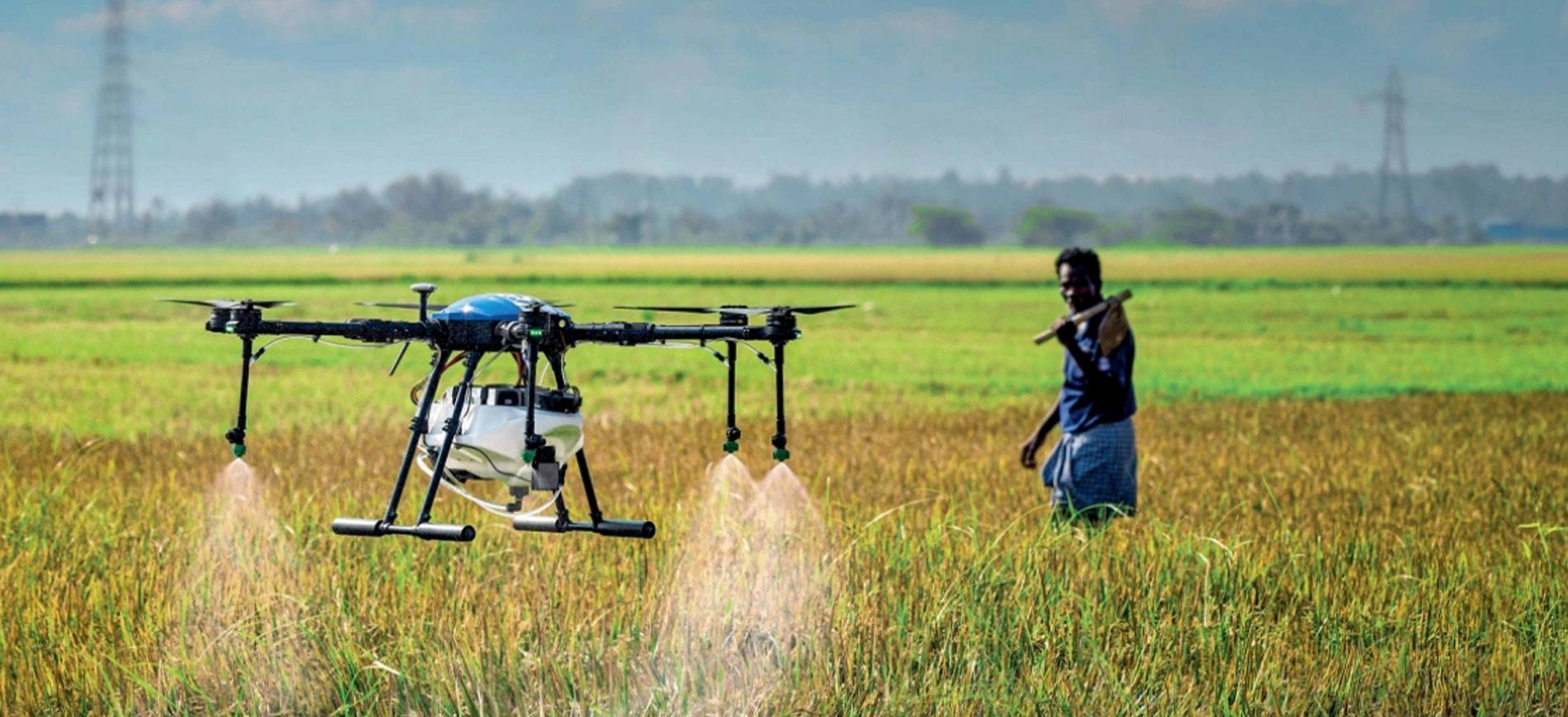
Farming in Nigeria is becoming increasingly data-driven, with farmers and agribusinesses using drones, satellite imagery and remote sensing to understand what is happening across a field without relying entirely on walking it, according to Geoinfotech. The push has taken on urgency as desertification, insecurity and rapid population growth force farmers to produce more from existing land, with an agritech specialist arguing that states such as Benue and Southern Kaduna must shift from clearing new land toward data-driven intensification, according to Peoples Gazette.
Spraying Smarter, Not Harder
The clearest gains are in crop protection. Drone spraying can cover up to 30 acres an hour, roughly tripling the speed of manual application while cutting chemical use by 30 to 40 per cent compared with ground equipment, according to a precision-farming analysis by Farmonaut. Commercial farms in Kebbi, Kano and Benue states are already using agricultural drones such as the 50-litre DJI Agras T50 for spraying, according to Geoinfotech. Because the operator controls the aircraft from outside the active spray zone rather than walking through the treated field, the technology can also reduce direct chemical exposure during application, the same firm noted.
A Weapon Against Fall Armyworm
The timing matters because fall armyworm has been recorded across Nigeria's agroecological zones, and an untreated outbreak can cause major yield losses in maize fields within weeks, according to Geoinfotech, which said drone spraying gives farmers another way to manage outbreaks by improving response time and application efficiency. The company's documented work includes rice-farm spraying operations in Kebbi and Benue states, the same account noted.
Built for Nigerian Conditions
Some operators are adapting the hardware to local realities. Integrated Aerial Precision has assembled drones locally, fine-tuned for dust and humidity, rolled out pay-as-you-go services aimed at smallholders as well as commercial farms, and partnered with the drone maker DJI to bring newer models to Nigerian fields, according to the company's account of its work, which also describes youth and women-focused training to build a pipeline of drone pilots and data analysts. Adoption still depends on equipment costs, technical expertise and reliable connectivity, Geoinfotech cautioned, which means the technology remains out of reach for many.
Better pest control and less wasted chemical eventually feed into bigger, cheaper harvests. FoodPrices Nigeria tracks verified retail prices across Lagos markets and follows the on-farm shifts that decide how much food reaches the stall, and at what cost.