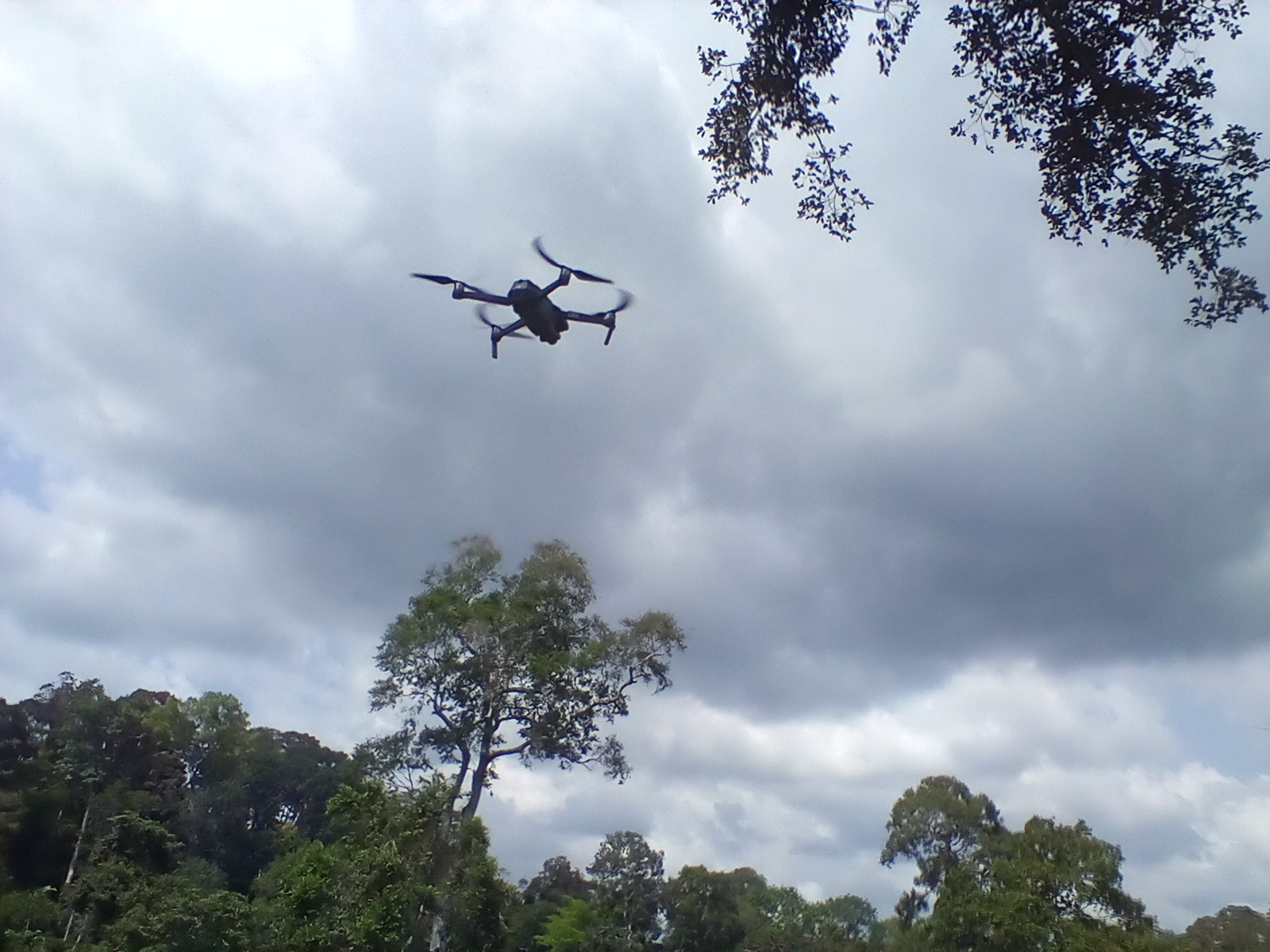
Nigeria's food problem is often framed as a shortage of land, but a growing group of specialists argues the real fix is squeezing more from the fields already under cultivation. An agritech expert has urged farmers, especially in Benue and Southern Kaduna, to shift from clearing new land toward data-driven intensification using drones and soil mapping, warning that expanding farms into contested territory can worsen conflict over grazing routes, according to the Peoples Gazette.
Eyes in the Sky
The appeal of drones lies in early warning. Fitted with multispectral sensors, they can detect crop stress, pest attacks and moisture shortages before any damage is visible to the eye, allowing farmers to act before losses mount, the Gazette reported. The same technology enables spot spraying, so that pesticides are applied only to affected patches rather than whole fields, cutting chemical use while protecting healthy crops and nearby water sources. The stakes are high, with modelling suggesting pest-related maize losses in Nigeria could range from 18 to 75 per cent, a burden of roughly $72 to $675 for every hectare, according to Phys.org.
A Local Industry Takes Off
The tools are no longer theoretical. Nigerian firm Integrated Aerial Precision deploys artificial-intelligence-powered drones and analytics to help farmers spot problems early and apply inputs precisely, offering pay-as-you-go services, assembling drones locally for local conditions and partnering with the global manufacturer DJI to bring in models such as the Agras series, according to the company. Its clients include commercial operations like Soilless Farm Lab, showing demand from both large farms and smallholders.
Barriers to Scale
Wider adoption still faces real obstacles. Analysts note that Nigeria's agritech drone market is used for precision farming, crop scouting, field mapping, spraying and soil analysis, and is increasingly offered through drone-as-a-service and leasing models, but it is held back by high upfront costs, limited awareness among farmers and regulatory hurdles, according to Ken Research. Bridging those gaps, advocates argue, would let farmers double yields on a fraction of the land without pushing into disputed terrain.
Higher yields on existing farms are one of the surest ways to steady supply and calm prices. FoodPrices Nigeria tracks verified retail prices across Lagos markets and follows the technology that could change how much food each hectare delivers.