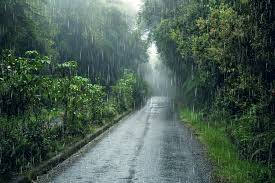
The Federal Government has warned Nigerian farmers not to mistake the early rains already falling across parts of the south for the start of the 2026 rainy season — a misstep that could lead to crop failure, wasted inputs, and ultimately higher food prices in the months ahead.
The warning came on Tuesday at the public presentation of NiMet's 2026 Seasonal Climate Prediction (SCP) in Abuja, where the Minister of Aviation and Aerospace Development, Festus Keyamo, laid out the year's rainfall outlook and urged farmers to wait for official onset dates before planting.
"We have already seen some significant rains across the southern parts of the country this year. Let me reiterate that these should not be taken to mean that the rainy season has started in these places," Keyamo said. "Those engaged in rain-fed agriculture and other rainfall-dependent activities in Nigeria are therefore advised to refer to the predicted onset dates in this publication or consult NiMet for proper guidance."
Sources: Punch Newspapers, ThisDay Live
Which States Will See Rain First — and Which Must Wait
The 2026 SCP reveals a split picture across the country. Early rainfall onset is expected in 16 states: Bayelsa, Rivers, Akwa Ibom, Cross River, Benue, Kogi, Nasarawa, Oyo, and parts of Kebbi, Niger, Jigawa, Katsina, Kano, Adamawa, and Taraba. These are states where the rainy season is predicted to begin earlier than the long-term average.
On the other end, Borno State is expected to experience a late onset of rainfall — a concern for a region already grappling with food insecurity and displacement.
Thirteen states are predicted to have a longer-than-normal rainy season: Lagos, Benue, Enugu, Ebonyi, Ogun, Oyo, Nasarawa, Anambra, Kwara, Kebbi, Kaduna, Gombe, and Taraba. Meanwhile, parts of Borno, Yobe, and Niger are expected to have a shorter rainy season than normal.
Sources: Leadership, Peoples Daily, EnviroNews Nigeria
Normal Rainfall Expected Nationally, But Pockets of Risk
NiMet projects that most parts of Nigeria will receive normal annual rainfall compared to the long-term average. However, the distribution won't be even. Above-normal rainfall is expected in Borno, Sokoto, Kebbi, Kaduna, Enugu, Cross River, Abia, Ebonyi, Akwa Ibom, and the Federal Capital Territory. Below-normal rainfall is anticipated in parts of Katsina, Zamfara, Kwara, Oyo, and Ogun.
The forecast also warns of significant dry spells that could disrupt growing seasons. During March to May, severe dry spells exceeding 15 days are likely in parts of Oyo and Ogun. During June to August — a critical growing period — severe dry spells lasting up to 21 days are predicted for parts of Bauchi, Borno, Gombe, Jigawa, Katsina, Kano, Kebbi, Kwara, Nasarawa, Niger, Oyo, Plateau, Sokoto, Yobe, and Zamfara.
Lagos faces a particularly notable forecast: the Little Dry Season ("August Break") is predicted to begin by late July and will be severe and prolonged over Lagos, Ogun, Ekiti, and parts of Oyo, with 28 to 40 days of little or no rainfall.
Sources: ThisDay Live, EnviroNews Nigeria
Why This Matters for Food Prices
Rainfall timing directly drives food price cycles in Nigeria. When farmers plant too early based on "false rains" — rainfall that occurs before the actual onset of the rainy season — seeds can fail, inputs are wasted, and the resulting supply shortfall shows up as price spikes months later at markets like Mile 12, Daleko, and Oshodi.
FoodPrices Nigeria's own Inflation Tracker already shows the kind of volatility that supply disruptions produce. In January 2026, sweet potatoes surged 204% month-over-month across Lagos markets before crashing 81% in February as supply normalized. Onions spiked 120% in January before falling 54% in February. These extreme swings are characteristic of a food system where planting decisions, weather shocks, and limited storage infrastructure create boom-and-bust price cycles.
The NiMet forecast introduces several food price risk factors to watch:
States with below-normal rainfall (Katsina, Zamfara, Kwara, Oyo, Ogun) could see reduced yields of key crops, potentially driving up prices of grains and tubers from these producing regions.
The severe August Break in Lagos (28–40 days) could disrupt vegetable supply chains, particularly for tomatoes and peppers which are highly sensitive to rainfall interruptions. FoodPrices data already shows tomatoes and pepper as among the most volatile items on the Lagos tracker.
Extended dry spells in northern states during June–August threaten grain production across the region that supplies much of the country's beans, maize, and sorghum. With beans already surging 48% in February while every other staple fell, any further supply disruption from the north could intensify pressure on what is already the market's most stubborn inflation point.
The longer rainy season in 13 states is a potential positive — more growing days could support higher yields for crops like rice, cassava, and yam, helping to sustain the price corrections seen in early 2026.
NiMet Deploying AI, Expanding Digital Advisory
NiMet Director-General Prof. Charles Anosike disclosed that the agency is adopting AI to improve forecasting accuracy. "We have set up a team of experts to ensure that NiMet is at the forefront of integrating and operationalising Artificial Intelligence in our forecasting responsibilities," he said.
The agency is also working to expand its digital advisory services and partner with state governments to downscale the national SCP into localized guidance that reaches farmers directly.
The Federal Ministry of Information described the SCP as "a strategic national resource that equips policymakers, planners and stakeholders with credible, actionable climate information."
Sources: Punch Newspapers, Federal Ministry of Information
The Bigger Picture: 34.7 Million at Risk
The rainfall forecast arrives against a sobering backdrop. The FAO's October 2025 Cadre Harmonisé analysis projects that 34.7 million Nigerians could face severe food insecurity during the June to August 2026 lean season — the same window when NiMet forecasts severe dry spells across 15 northern states.
Meanwhile, BusinessDay recently reported that prolonged, unseasonal rainfall in January and February 2026 has already raised concerns among farmers about disrupted fruiting cycles for cashew and oil palm, and the potential for increased pest and disease burdens for dry-season crops.
The combination of climate unpredictability, an already-fragile food supply chain, and persistent price volatility makes NiMet's guidance more consequential than ever — not just for farmers deciding when to plant, but for every Nigerian household planning what they can afford to eat.
Sources: Daily Trust, BusinessDay
Track real-time food prices, inflation data, and market intelligence at foodprices.ng. The FoodPrices Inflation Tracker monitors month-over-month price changes across Lagos markets — visit foodprices.ng/inflation for the latest data.