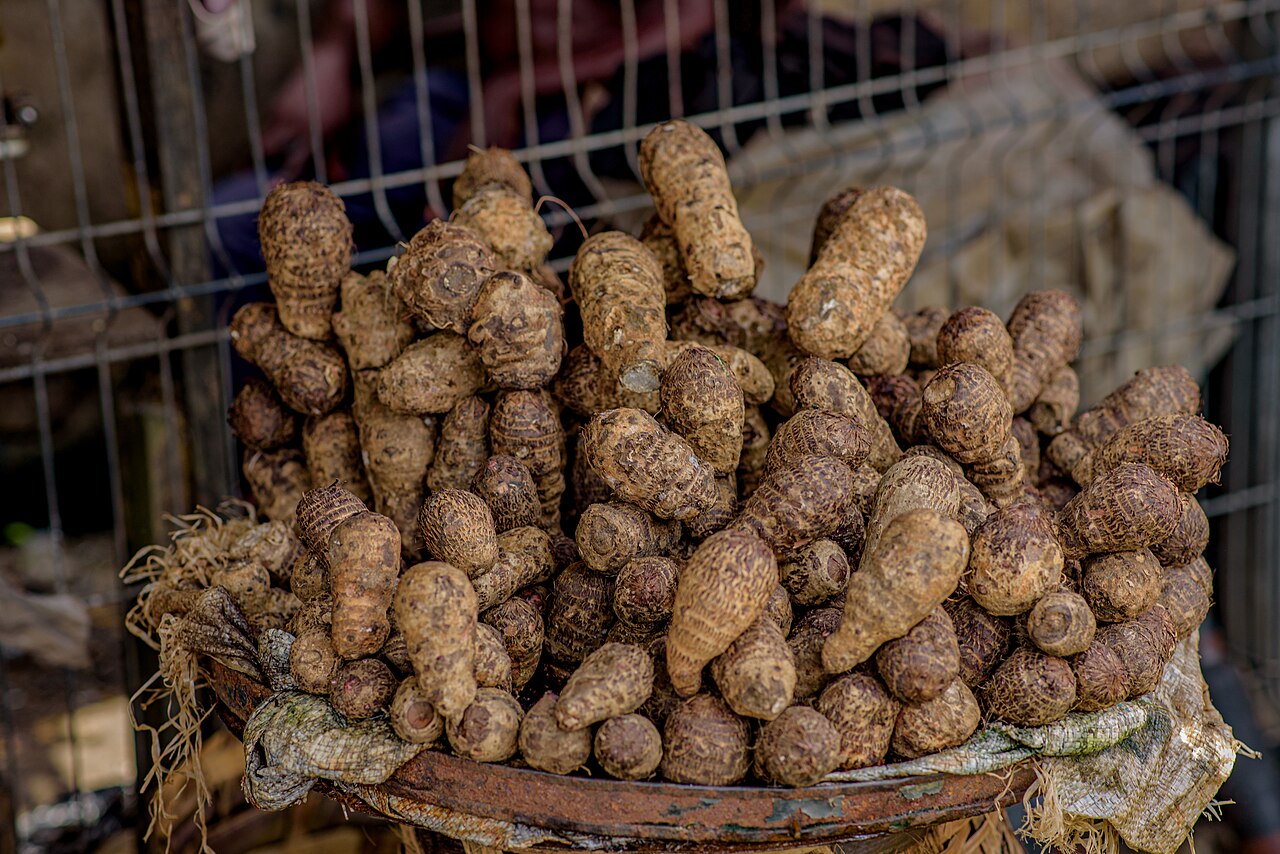
Nigeria holds a world title few Nigerians talk about. The country is the largest producer of cocoyam on earth, growing about 5.49 million tonnes a year, equal to 45.9 per cent of world output and 72.2 per cent of West Africa's total, according to research by the CGIAR Research Program on Roots, Tubers and Bananas. Cocoyam ranks third in importance after cassava and yam among the root and tuber crops grown and eaten in Nigeria, and the National Root Crops Research Institute calls it the country's Giant Crop for its nutritional edge over other roots, according to the Institute.
A Crop That Feeds Completely
Part of cocoyam's appeal is that almost none of it is wasted. Among root and tuber crops in Nigeria it is the only fully edible one, with the corms and cormels eaten in various forms and the leaves and flowers used to garnish and flavour food, according to the National Root Crops Research Institute. The corms are a good source of carbohydrate with easily digestible starch, and the crop can be turned into flour, cake, crisps and chips, giving it value as both a family meal and an agro-industrial raw material, as documented in research cited by the CGIAR Research Program on Roots, Tubers and Bananas.
Neglected by Almost Everyone
For all that promise, cocoyam has received little attention from either government or the research community, and relatively few farmers cultivate it, according to the CGIAR Research Program on Roots, Tubers and Bananas. A major obstacle to expanding output is the susceptibility of planting materials to rotting in the field before the next season, a storage problem that keeps supply from matching the growing population's demand, as noted in a University of Ibadan study summarised by ResearchGate.
Research Tries to Spark a Rebirth
Efforts to revive the crop are under way. The National Root Crops Research Institute has run a cocoyam rebirth campaign built around consumption awareness and a Gocken Rapid Multiplication Technology that cuts the cost of planting material by about 90 per cent and has widened the crop's genetic base by more than half, according to the Institute. Analysts have long argued that Nigeria's push to diversify its economy should lean harder on tubers like cocoyam, even as broader agricultural growth has slowed, according to Proshare.
A cheap, nutritious staple that the country already leads the world in growing is exactly the kind of crop that could ease pressure on more expensive foods. FoodPrices Nigeria tracks verified retail prices for roots, tubers and staples across Lagos markets and follows the crops whose potential could reshape what households pay.
#Cocoyam, #RootCrops, #FoodSecurity, #Nigeria, #Lagos, #FoodPrices, #Agriculture, #Nutrition, #ValueAddition, #Staples