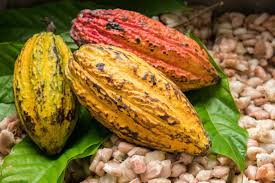
In commodity markets, cocoa has experienced one of the sharpest price reversals in recent memory. According to J.P. Morgan Global Research, prices surpassed $12,000 per tonne at the end of 2024 — driven by crop failures, disease, and supply chain disruption in West Africa — before plunging to below $8,000 per tonne through 2025. Food Ingredients First (January 14, 2026) reported that International Cocoa Organization data for early January 2026 showed cocoa trading at around $5,400–$6,000 per tonne, a decline of more than 10 percent year-on-year in just the first 12 days of the year.
Consumers, however, have seen no corresponding relief. According to NewsandJava (February 18, 2026), citing Bureau of Labor Statistics data, retail chocolate prices jumped 14.4 percent in the early weeks of 2026 compared to the same period last year, accelerating from a 7.8 percent increase the year prior. The USDA Economic Research Service’s Food Price Outlook (January 2026) projects sugar and sweets prices will increase by 6.7 percent through 2026.
The gap between falling commodity prices and rising shelf prices illustrates a familiar pattern. As reported by Food Navigator (December 10, 2025), Stephen Butler, CCO and co-founder at commodity prediction platform ChAI, noted that cocoa prices remain unlikely to fall significantly from current levels because global supplies appear smaller than previously forecast.
The chocolate industry used the crisis as a catalyst for structural changes. Food Navigator’s investigation (January 19, 2026) detailed how manufacturers have reduced cocoa content, shrunk pack sizes, and reformulated recipes to protect margins. UK authorities recently ruled that Nestlé’s Toffee Crisp and Blue Riband bars can no longer legally be called “chocolate” because reformulations pushed cocoa content below the required 20 percent threshold.
J.P. Morgan Research expects cocoa to stabilise around $6,000 per tonne — structurally higher than pre-crisis levels. The World Bank’s commodity outlook (December 2, 2025) projects cocoa prices to fall by 6 percent in 2026 and an additional 7 percent in 2027 as supplies recover. Global cocoa output is projected to rebound by more than 10 percent, with production increases of 5 percent in Côte d’Ivoire and 34 percent in Ghana.
Meanwhile, innovation is accelerating at the edges. As reported by Food Navigator (January 19, 2026), Cargill has launched “NextCoa,” a cocoa-free confectionery alternative made from grape and sunflower seeds, in partnership with California startup Voyage Foods. Barry Callebaut, the world’s largest chocolate maker, signed a long-term agreement with alt-chocolate maker Planet A Foods to develop sustainable chocolate solutions without cocoa. Lab-grown cocoa butter and fermented cocoa powder startups are also scaling toward semi-industrial production.
For Nigerian cocoa farmers, the outlook demands close attention. Analysts cited by Food Ingredients First forecast surpluses in the 2025/26 and 2026/27 seasons as higher prices incentivise expanded global production. The window of elevated prices that briefly rewarded producers may be closing — even as retail prices remain stubbornly high.