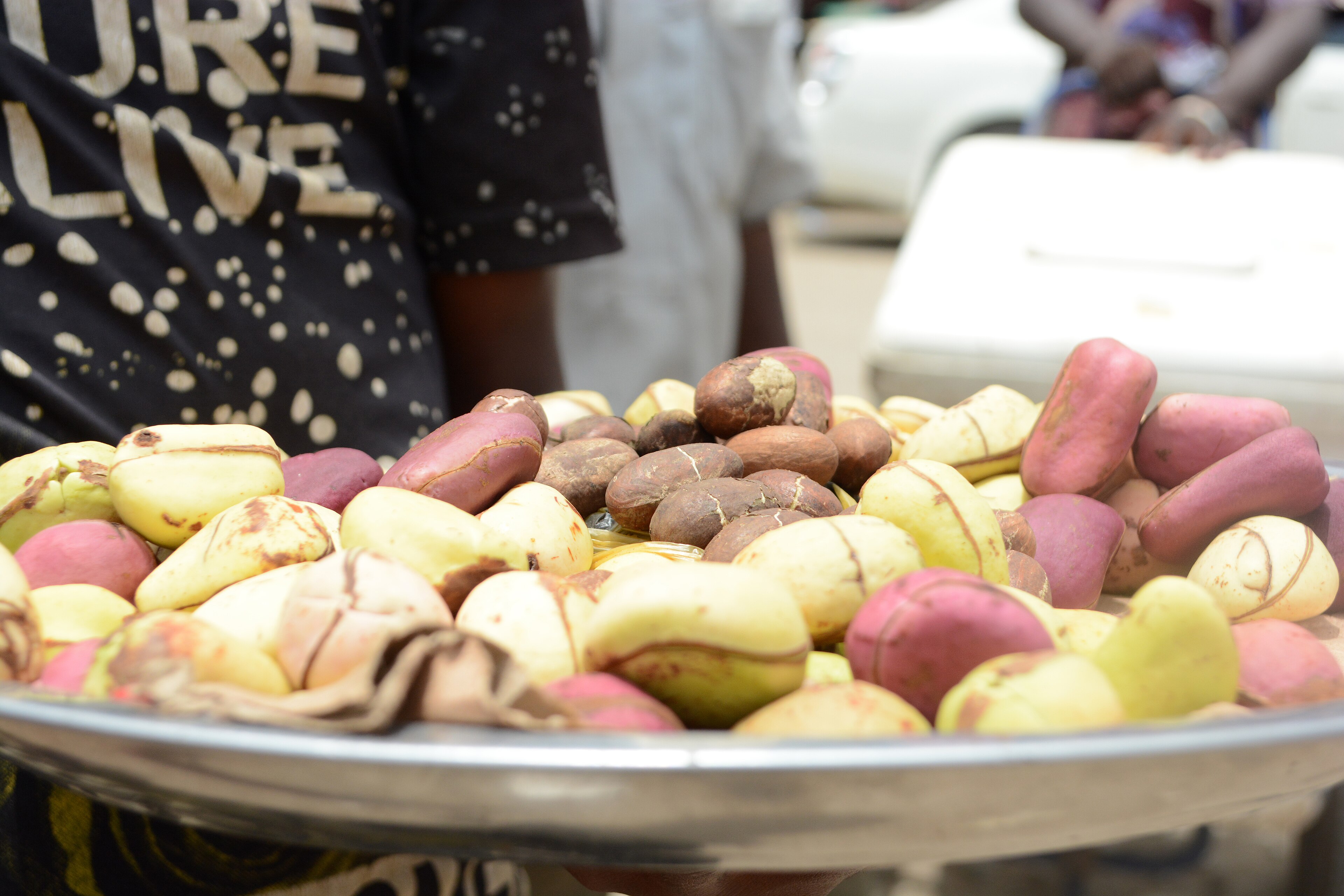
Few Nigerian foods carry as much cultural weight for their size as bitter kola, the wrinkled seed passed around at naming ceremonies, weddings and prayers. Known as orogbo in Yoruba, akiilu in Igbo and namijin goro in Hausa, Garcinia kola is so widely used in traditional medicine that researchers have nicknamed it the wonder plant, with its seeds, bark and roots all put to use, according to Naturenews.
A High-Value Seed
The nut commands real value abroad. Export prices for Nigerian bitter kola range from roughly $15 to $24 per kilogram depending on quality and quantity, according to Naturenews, with the United States, the United Kingdom and China among the major importers, according to trade profiles compiled by Neogric. The fruit is highly seasonal, harvested between about July and October, which sharpens price swings for a crop that is rarely stored or processed at scale, according to Neogric.
Medicine in a Nutshell
The interest is not only culinary. Bitter kola seeds are traditionally taken to ease coughs, throat infections and gastric disorders, and their bioactive compounds have drawn attention from the pharmaceutical and herbal industries as possible treatments for ailments including malaria and hepatitis, according to a peer-reviewed review published in MDPI's Forests journal. That study noted that seeds harvested in Nigeria already move across borders into markets in Benin and Cameroon, even though exports beyond Africa remain poorly documented and the tree is only at the early stages of domestication.
Grown Wild, Sold Raw
Therein lies the missed opportunity. Because most bitter kola is still gathered from wild forest trees rather than cultivated plantations, supply is unpredictable and the crop is largely traded in raw form, capturing little of the value that processed extracts and supplements earn, as the MDPI review set out. Exporters have warned that overharvesting from the wild threatens natural populations, and have urged a shift toward sustainable, commercial cultivation and fair trade that rewards the communities where the tree grows, according to Ela Agro Export.
Turning a wild-gathered seed into a cultivated, processed export would keep more value inside Nigeria and steady incomes for forest communities. FoodPrices Nigeria tracks verified prices across Lagos markets and follows the crops whose potential still sits, largely, in the wild.