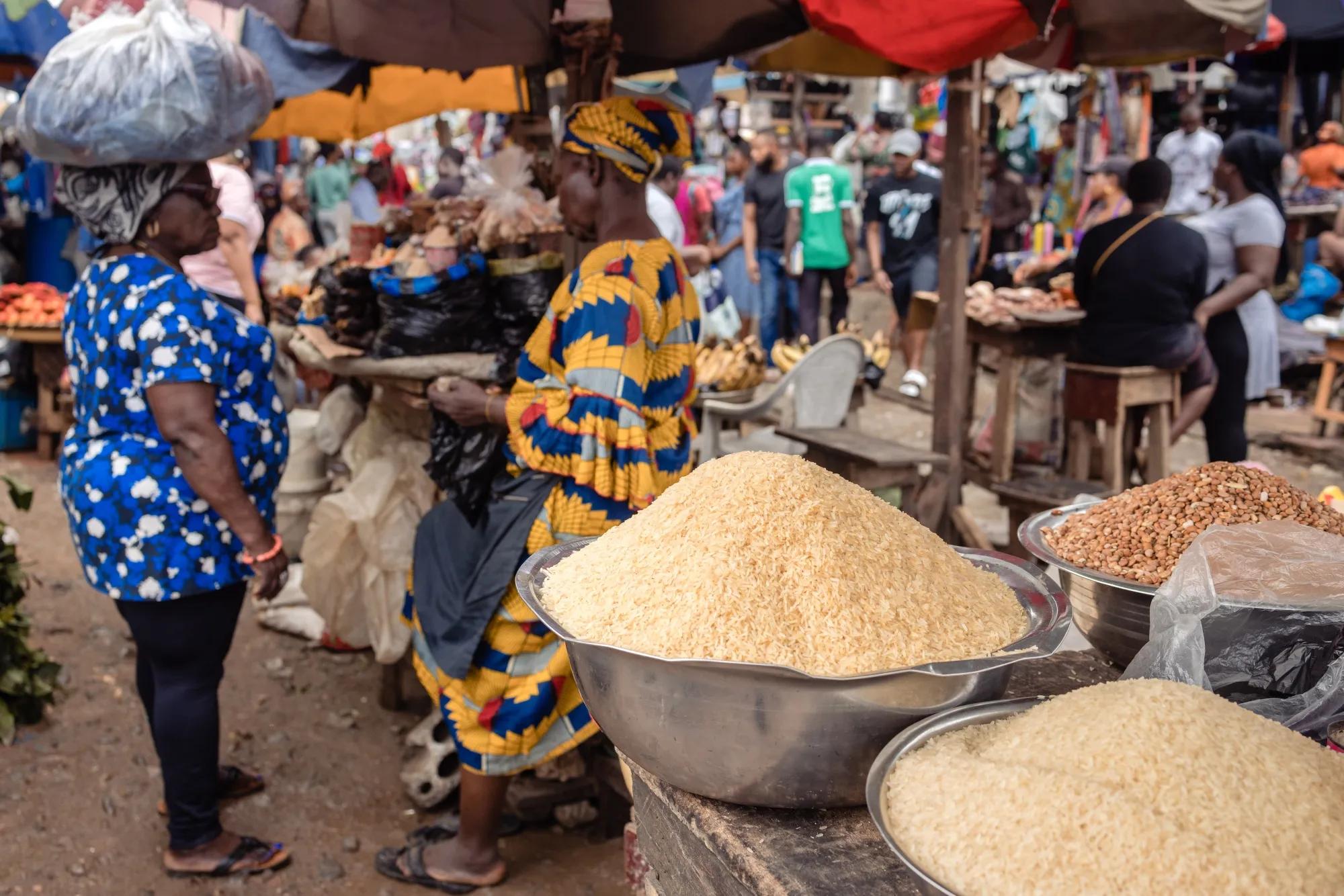
The measure most Lagos households actually buy beans in got cheaper this week. The Ministry of Agriculture and Food Systems market survey for the week of 17 July 2026 puts Beans (Oloyin) at a Lagos average of ₦1,062 per derica across eight reporting markets, down 5.6% from ₦1,125 in the prior survey. Over four weeks the price is up 7.4% from ₦989, and since 9 January it has fallen 4.6% from ₦1,114.
Four Markets Meet at ₦1,000
Agege Market holds the cheapest quote at ₦900, which is 15.3% below the Lagos average. A four way tie at ₦1,000 covers Mushin Market, Ile-Epo Market, Sabo Market Yaba and Agbalata Market. Oyingbo Market quotes ₦1,100, Mile 12 Market ₦1,200 and Ajah Market ₦1,300, the last of these 22.4% above the citywide average. The ₦400 spread makes the dearest derica 44% more expensive than the cheapest.
Why the Small Measure Matters Most
The derica is the unit of the daily shop rather than the monthly stock up, which makes it the measure that tracks household pressure most closely. A 44% gap on a purchase this small will not register as a large naira figure on any single day, but it repeats every time a household buys. Nigeria's minimum wage is ₦70,000 a month, and the ₦400 difference between Agege Market and Ajah Market amounts to 0.6% of that wage per purchase. A household buying four dericas a week keeps ₦6,400 across a month by holding to the cheapest quote, which is 9.1% of the minimum wage.
A Weekly Fall Inside an Annual Fall
Beans have been one of the clearest downward movers in Nigerian food data this year. The National Bureau of Statistics recorded brown beans down 44.89% year on year in April, reported by Nairametrics, and had reported a 49.32% annual decline in the March edition of the same series, covered by Nairametrics. Legit.ng reported bureau figures showing brown beans falling from ₦2,458.53 to ₦1,262.43 per kilogram between January 2025 and January 2026. The Lagos survey agrees on the annual direction at a much gentler slope, and disagrees over four weeks, where the derica has risen 7.4%.
Lean Season Pressure Explains the Monthly Rise
The monthly climb lands in the middle of the lean period. Leadership reported the All Farmers Association of Nigeria warning that fertiliser, seed and labour costs had risen sharply this season, alongside FAO projections that about 35 million Nigerians could face acute hunger between June and August. Vanguard reported cowpea among the specific drivers behind food inflation reaching 17.52% in June, and Sahara Reporters put month on month food inflation at 3.75% in June against 2.98% in May.
Oloyin Against Drum
Within the category, Beans (Drum) averaged ₦967 per derica this week, which puts Oloyin 9.8% higher for the same measure. Ajah Market is the only market on the Ajah and Lekki axis reporting an Oloyin derica price, and its ₦1,300 sits 26% above the mainland average of ₦1,029.
What the Data Signals for Buyers
Households buying by the derica are paying for flexibility rather than value, and the survey shows what that costs. Beans (Oloyin) averaged ₦4,820 per paint in the same week against ₦1,062 per derica, so the smaller measure is the more expensive way to buy the identical product. For a household with the cash to buy a paint at Fresh Food Hub Mushin at ₦3,500, the saving against repeated derica purchases is substantial. For one without it, the derica remains the only route, which is why a 44% spread on so small a unit matters more than its naira value suggests.
FoodPrices Nigeria will keep tracking the derica alongside the paint so households can see which measure is moving. Live prices: foodprices.ng/real-time-prices