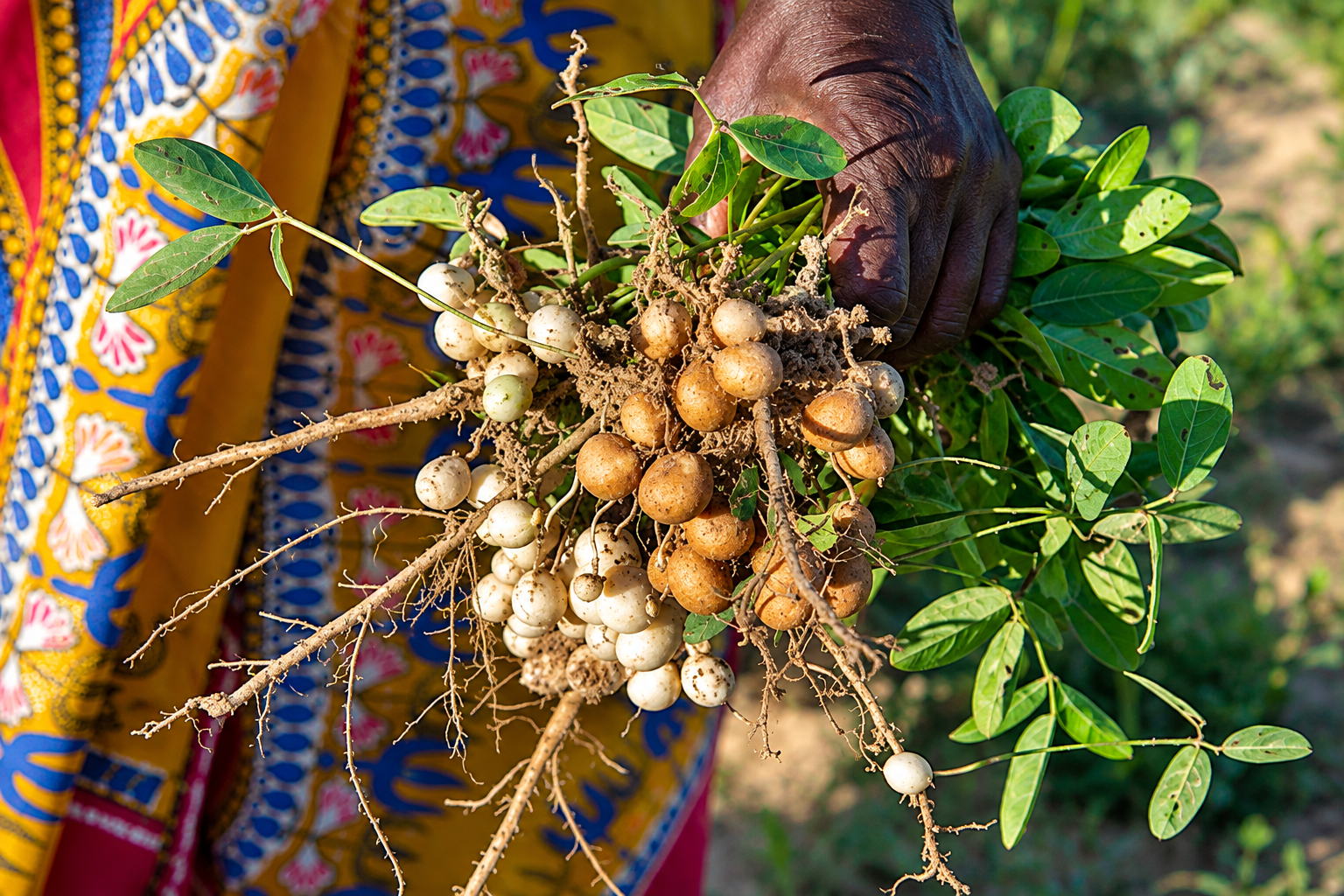
One of the most resilient crops in Nigeria's fields is also one of its most ignored. Bambara groundnut, a drought-hardy legume that thrives on poor soils and fixes its own nitrogen, remains underused despite strong agronomic and nutritional credentials, according to a study in Frontiers in Sustainable Food Systems. Nigeria is the continent's leading producer, with output reported at more than 100,000 tonnes, making it Africa's primary grower of the crop, the same study noted.
A Complete Food
Nutritionists have long spoken well of the legume. Bambara groundnut is sometimes described as a complete food because of its balanced macronutrient profile, carrying roughly 18 to 26 per cent protein alongside a high share of carbohydrates, according to research published in Frontiers in Nutrition. It ranks third in importance among grain legumes in Africa after groundnut and cowpea, and it is valued as an affordable protein source for poorer households that cannot rely on meat, according to a review in the Journal of Agricultural Science.
Hardy Where Others Fail
The crop's biggest strength is its toughness. Bambara groundnut produces reasonable yields on marginal, poorly drained or nutrient-poor soils and withstands extreme heat and drought, and because beneficial microbes in its root nodules fix nitrogen, it can be grown without fertiliser, according to Frontiers in Sustainable Food Systems. Those climate-smart traits matter as Nigerian farmers face hotter, more erratic seasons, yet the plant still sits on the margins of the food system.
Why It Stays Neglected
The barriers are economic and social rather than agronomic. The legume remains underutilised due to limited research investment, underdeveloped markets and cultural perceptions that tie it to subsistence farming, particularly among women growers, according to Frontiers in Sustainable Food Systems. Breeding progress has been slow, held back by poorly coordinated or non-existent seed systems, a lack of value-added products and weak market structures, according to research in Agronomy. Even so, studies in producing states have found the crop profitable, with work in Benue reporting positive gross margins and farmer technical efficiency of about 70 per cent, according to a paper hosted by the International Society for Horticultural Science.
A Missed Buffer
Nigeria's failure to scale a homegrown, climate-proof protein source is striking against the backdrop of a heavy reliance on imported food, with Africa spending a record $122.9 billion on agricultural imports in 2022, according to The Guardian. A crop that grows where others fail, feeds people cheaply and heals the soil is exactly the kind of buffer a stressed food system needs. FoodPrices Nigeria tracks verified retail prices for beans and other staples across Lagos markets, where a stronger supply of affordable plant protein would ease pressure on household budgets.