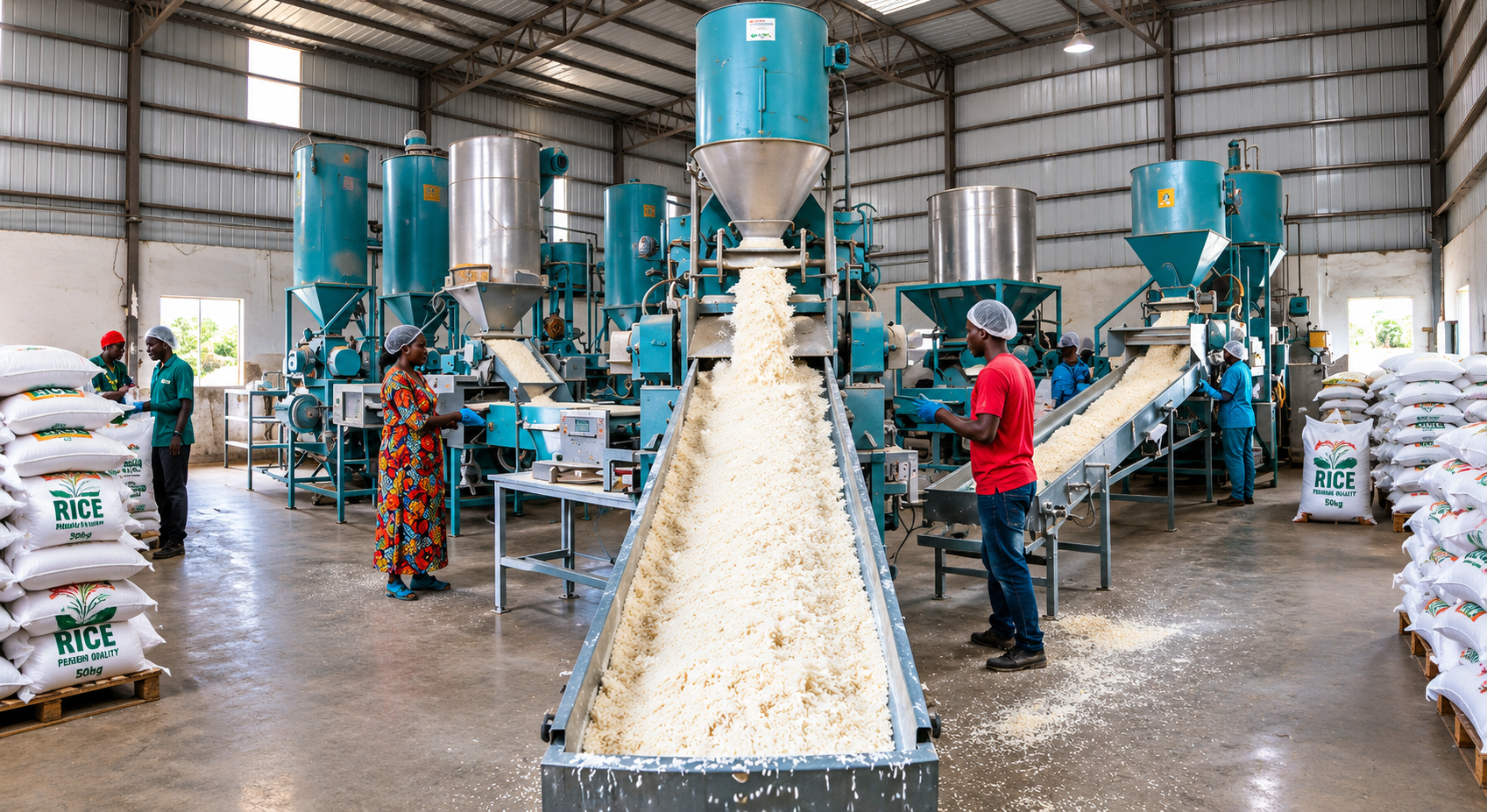
Anambra State has opened a factory built to keep its root crops from rotting in the field, commissioning a plant that turns cassava, yam and potato into organic flour for both local shelves and export markets. The 15-tonnes-per-month Afrirootz factory in Akwaeze, Anaocha Local Government Area, was established by Ideal Agro Allied Produce Limited and inaugurated in May 2026, according to Voice of Nigeria.
From Raw Tuber to Packaged Flour
The company processes locally cultivated cassava, yam and potato sourced from its own farms and partner growers into flour products aimed at consumers and industrial buyers, according to Voice of Nigeria. The founder, industrialist Chief Ikenna Okafor, said the facility would process unsold yams, cassava, potatoes and other tuber crops for export markets, and disclosed that the company had begun large-scale yam cultivation on a 200-plot farmland in Ufuma, Orumba North Local Government Area, according to African Health Report.
A State Push for Industrial Farming
The plant is one piece of a wider state strategy. The Commissioner for Agriculture, Ben Odoemena, described the project as a major step toward industrialising agriculture through private-sector investment and value addition, and said the administration of Governor Chukwuma Soludo was committed to helping farmers migrate from subsistence to commercial and industrial-scale production, according to Premium Times reporting carried by Gazette NGR. He framed food security as critical to the growth of any society and argued that farmers in Akwaeze and beyond could benefit economically, including through exports of processed produce, according to Voice of Nigeria.
Chasing Exports and Cutting Waste
The state has been explicit about the foreign-exchange angle. Officials said the facility is designed to process yam, cassava, potatoes and other tuber crops for local and export markets, part of a plan to reduce post-harvest losses and lift farmers' earnings, according to Arise News. Post-harvest waste has long drained value from Nigeria's tuber belt, where gluts at harvest can push prices to the floor and leave produce to spoil before it reaches a market.
Why It Matters Beyond Anambra
Turning perishable tubers into shelf-stable flour keeps value and jobs inside the state and gives farmers a buyer even in a bumper year. Anambra's move reflects a broader shift among food-producing states toward value addition rather than raw sale, a change officials hope will steady rural incomes and open new markets abroad. FoodPrices Nigeria tracks verified retail prices for staples across Lagos markets, where stronger processing of cassava, yam and potato could, over time, influence what households pay.