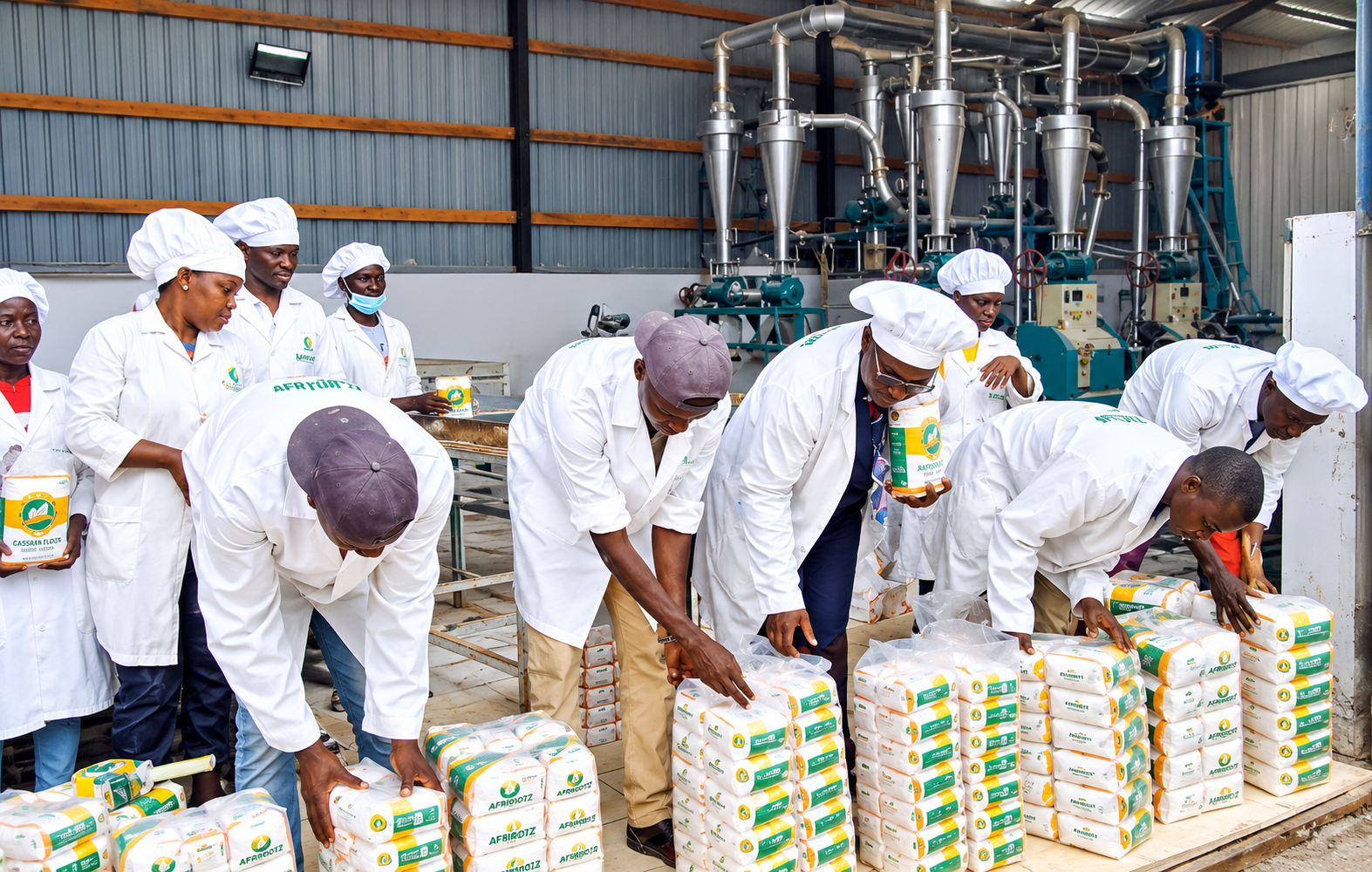
Anambra State has taken a step toward turning its root crops into finished food, commissioning a flour factory that processes cassava, yam and potato into organic flour for both local consumption and export. The facility, built in Akwaeze in the Anaocha Local Government Area by Ideal Agro Allied Produce Limited under its Afrirootz brand, has the capacity to process up to 15 tonnes of flour a month at full operation, according to Voice of Nigeria.
Value Addition at the Source
The plant is designed to keep more of the crop's worth inside the community. The State Commissioner for Agriculture, Ben Odoemena, described the project as a major step toward industrialising agriculture through private-sector investment and value addition, and said it would reduce post-harvest losses while expanding income opportunities for farmers, according to Voice of Nigeria. By converting perishable roots into shelf-stable flour, the factory gives growers in Akwaeze and neighbouring communities a dependable buyer close to the farm, cutting the waste that eats into their earnings.
Chasing Health-Conscious and Export Buyers
Afrirootz produces flour from locally cultivated cassava, yam and potato sourced from company-owned and partner farms, targeting both everyday kitchens and export markets, according to Voice of Nigeria. The pitch fits a wider shift in demand, with global buyers increasingly seeking gluten-free flour alternatives derived from roots and tubers, a trend that has drawn fresh attention to yam and cassava derivatives, according to an industry overview by Business Plans Nigeria.
Why Processing Matters
The investment speaks to one of Nigeria's most persistent weaknesses, the loss of food between farm and market. Analysts have repeatedly warned that post-harvest losses drain the country's food supply and inflate prices, and processing capacity close to production is one of the surest fixes. The stakes are visible in the price data, with the National Bureau of Statistics naming cassava flour and yam among the items behind food inflation of 17.52 per cent year-on-year in June 2026, according to Sahara Reporters. More local milling capacity is also a small counterweight to a food economy that still leans on imports, with Africa spending a record $122.9 billion on agricultural imports in 2022, according to The Guardian.
Every tonne of cassava or yam milled at home is food kept out of the waste pile and value kept in the community. FoodPrices Nigeria tracks verified retail prices for garri, flour and tubers across Lagos markets, where stronger processing capacity could, over time, steady both supply and prices.