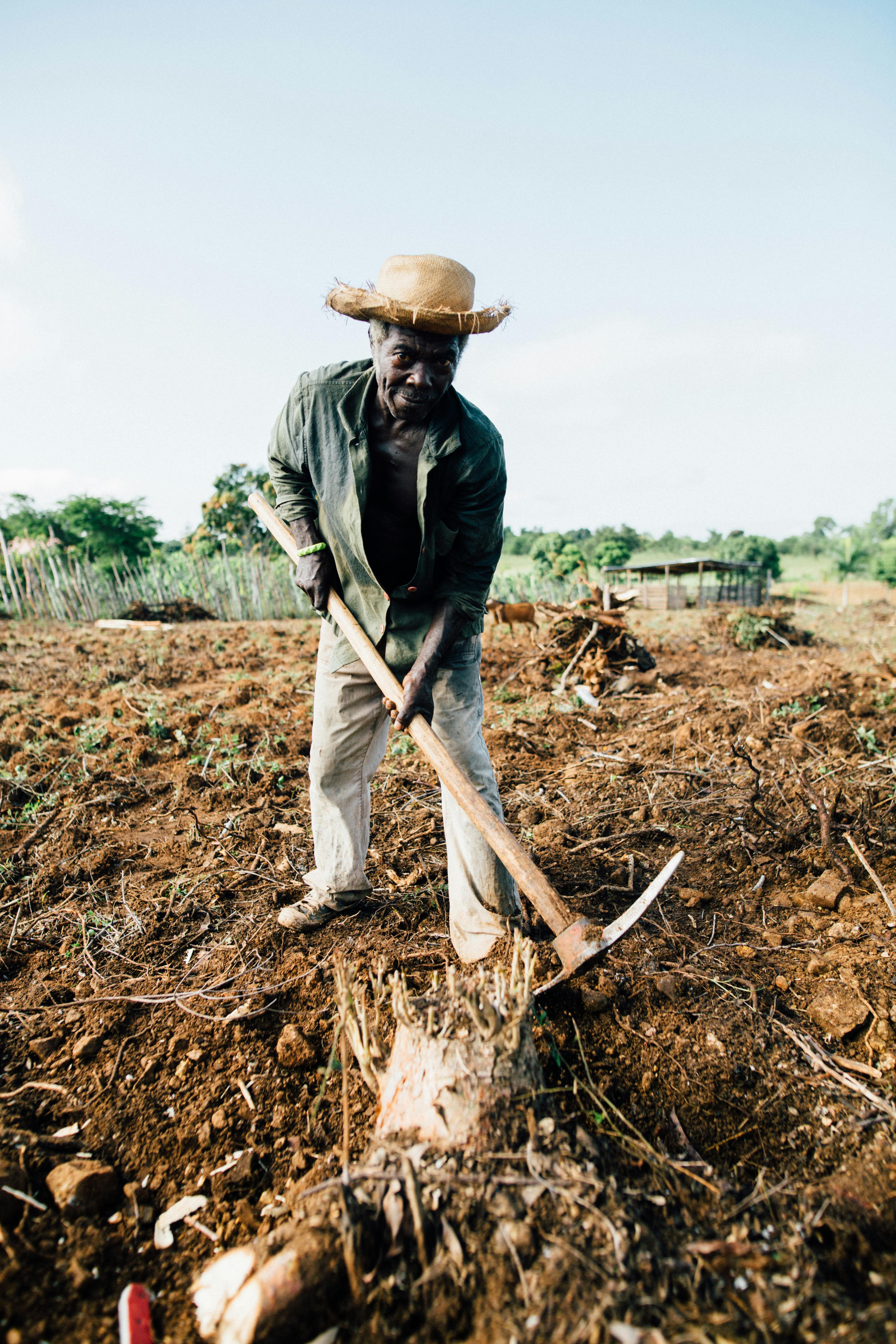
Nigerian farmers are scaling back food production at an alarming rate, shrinking planted acreage and abandoning nutrient-hungry staples in what BusinessDay describes as a strategic retreat driven by the cumulative losses of 2025. The contraction is most visible in the current dry-season planting cycle, where fields that would normally be cultivated are being left fallow or shifted to low-maintenance crops as producers attempt to avoid total financial wipeout. With input costs skyrocketing — fertiliser, seeds, diesel, and labour all remain elevated — and confidence at historic lows, the pullback threatens to create a supply crunch in the second half of 2026 that could reverse the hard-won disinflation gains that brought food inflation down to 8.89% in January.
The mathematics of farm-level economics explain why rational producers are choosing retreat over expansion. A hectare of maize cultivation in Nigeria's middle belt requires approximately ₦250,000-₦350,000 in inputs — seeds, fertiliser, herbicides, labour, and mechanisation — before a single kernel is harvested. At the depressed post-harvest farm-gate prices of late 2025, that same hectare yielded gross revenue of ₦300,000-₦400,000, leaving margins of ₦50,000 or less before accounting for land preparation, storage losses, and transportation to market. When heavy rains, flooding, or pest infestations destroyed portions of the harvest — as they did across multiple states in 2025 — many farmers didn't just earn thin margins; they recorded outright losses. The rational response to consecutive seasons of loss is exactly what the market is seeing: contraction, risk reduction, and exit from the sector entirely.
The broader context compounds the farm-level crisis. Insecurity across Nigeria's key agricultural zones continues to drive producers off their land. The devastating bandit attack on Woro and Nuku communities in Kwara State's Kaiama Local Government Area — which BusinessDay reported killed at least 40 people including soldiers and forest guards — represents the kind of escalating violence that makes agricultural investment in affected regions functionally impossible. When armed groups are actively fighting to seize control of forest reserves, farmers in surrounding areas face a choice between personal safety and food production. Across Benue, Niger, Nasarawa, Zamfara, and Kaduna States — collectively responsible for a significant share of Nigeria's yam, maize, rice, and vegetables — this security calculus is removing productive capacity from the food system faster than any policy intervention can replace it.
The World Food Programme's assessment reinforces the severity of the situation. According to WFP data, a record near-35 million Nigerians are currently facing food insecurity, driven by conflict, climate shocks, displacement, and the systemic collapse of local food systems. The northeast remains the epicentre, with nearly 5.8 million people facing severe food insecurity in 2026, including 15,000 in Borno State expected to face catastrophic hunger and famine-like conditions. The WFP needs at least $129 million for operations to continue until July 2026 — a funding gap that has already forced the suspension of 150 nutrition clinics in Borno and Yobe, placing 300,000 children at risk of wasting. The convergence of farmer retreat, insecurity, and humanitarian funding cuts creates a triple threat to Nigeria's food security infrastructure.
The policy paradox is acute: the same falling food prices that provided consumer relief in late 2025 and early 2026 are now destroying the economic incentive for production, potentially triggering a supply-demand imbalance that sends prices spiralling upward again. The Centre for the Promotion of Private Enterprise has warned explicitly that sustained weakness in farm-gate prices may reduce farmers' revenues and investment capacity, weaken rural purchasing power, and discourage production — creating the very supply shortages that drive renewed inflation. The Guardian quoted the Nigeria Agribusiness Group president Kabir Ibrahim cautioning that pervading insecurity and high input prices facing smallholder farmers call for decisive action to avoid imminent severe stresses in the food system in 2026 and beyond.
Government food import policies — designed to provide immediate consumer relief — may be inadvertently accelerating the farmer retreat. The federal government's emergency declaration exempting selected food staples from import duties successfully crashed domestic rice prices from ₦90,000 to ₦65,000 per 50kg bag and foreign parboiled rice from ₦92,000 to ₦62,000, according to Origin Tech Group subsidiary Sensale Research. While beneficial for consumers in the short term, the All Farmers Association of Nigeria has called this development harmful to the nation's agriculture. Grain merchants in Taraba State reported that since the import waiver announcement, companies and businesses that typically made bulk purchases of maize and paddy have drastically reduced their buying, collapsing the demand side of the domestic grain market. Farmers who invested ₦250,000+ per hectare in production are now competing with zero-duty imports — a contest many cannot survive.
The implications for Nigerian food prices over the next 6-12 months are significant and trackable. FoodPrices NG monitors prices across Lagos markets daily, and the platform's historical data shows clear patterns: production contractions in one planting season manifest as price increases 4-8 months later when the reduced harvest arrives at market. If the current dry-season retreat translates into lower planting during the main rainy season (April-September), Lagos consumers should expect upward price pressure on domestically produced staples — yam, maize, beans, vegetables, and locally milled rice — beginning around October 2026. The commodities most vulnerable to this supply crunch are precisely those that cannot be easily replaced by imports: fresh vegetables, tubers, and local grain varieties that are diet staples but lack direct import substitutes.
The African Development Bank's recently approved $200 million loan for Nigeria's National Agricultural Growth Scheme offers a medium-term counterweight, targeting improved productivity through better seeds, fertiliser access, and climate-smart farming practices. However, disbursement begins in March 2026 and implementation spans four years — far too slow to address the immediate planting-season retreat. What Nigerian agriculture needs in the near term is a combination of input cost subsidies that reach smallholders before the main planting season, guaranteed minimum prices for strategic crops that protect farmer incomes without distorting markets, and a security environment that allows producers to actually farm. Without these interventions, the current single-digit food inflation may prove to be a brief statistical achievement rather than a sustainable structural shift.
For consumers, the forward-looking strategy is clear: the current period of relatively lower grain and staple prices represents a purchasing window that may not last. Families with storage capacity should consider bulk purchasing of non-perishable staples — garri, beans, rice, dried pepper, and cooking oil — at today's prices while monitoring FoodPrices NG seasonal tracking for early signs of price reversals. The data consistently shows that households who buy strategically during post-harvest abundance and store properly can reduce their annual food expenditure by 15-25% compared to those who purchase week-to-week at prevailing retail prices. Given the structural risks now building in the production pipeline, that strategic purchasing discipline may prove more valuable in 2026 than any government intervention.
Sources: BusinessDay Nigeria news brief (February 2026), The Guardian Nigeria food inflation coverage, World Food Programme Nigeria country assessment, Independent Newspaper Nigeria agricultural sector outlook, FoodPrices NG verified market agent reports across Lagos State.