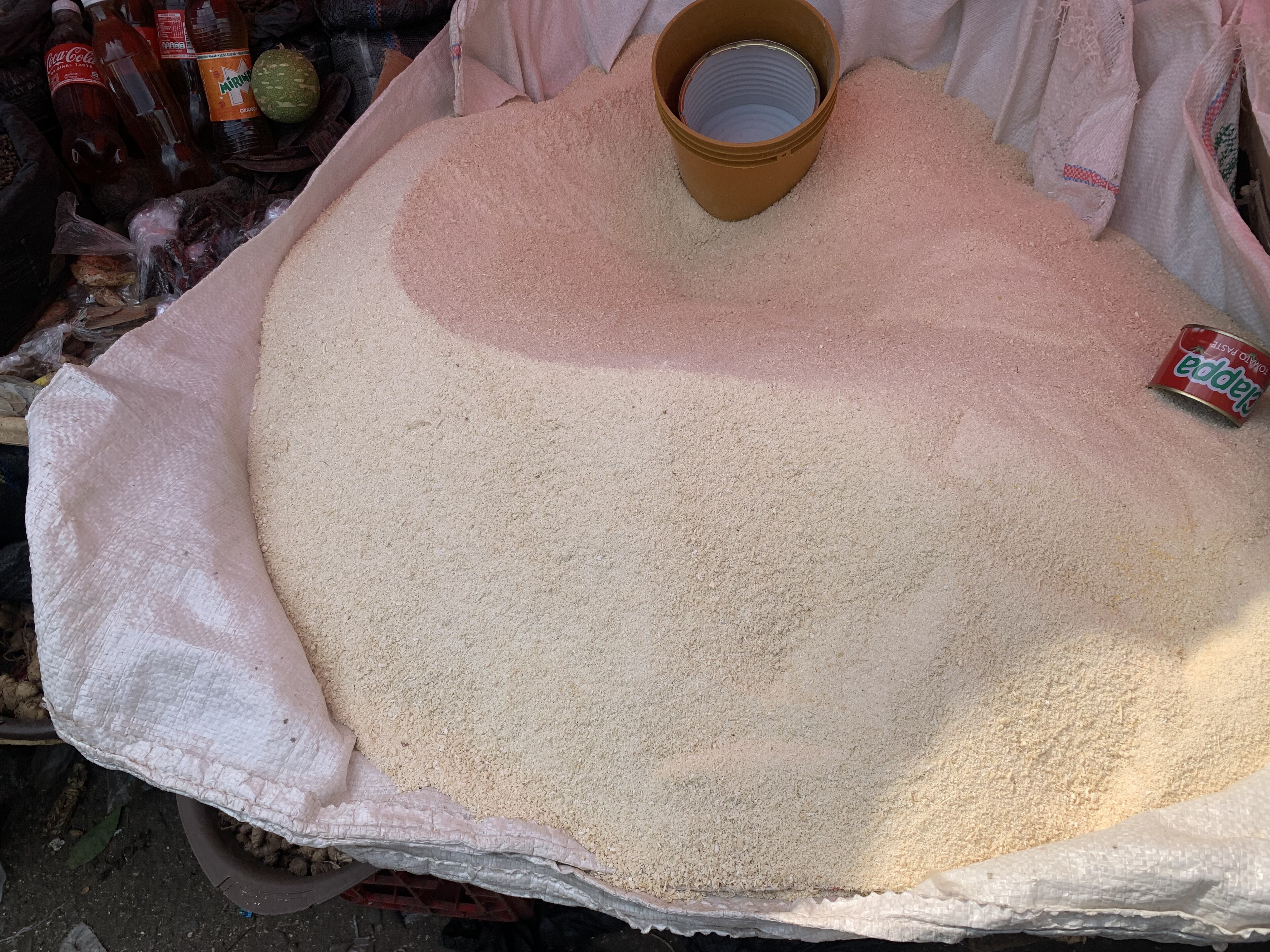
White garri at Ajah Market took the long way round in the first half of 2026. A 50kg bag started at N26,000 in the week of January 19, then dropped to N20,000 across the weeks of February 2, February 9 and February 23, a fall of 23.1%. It did not stay down. By the week of June 1 the bag had climbed to N27,000, a rise of 35.0% off the February floor and a touch above where it began the year. For a staple that many Lagos households buy in bulk, that round trip means a buyer who stocked up in February caught the bottom, while a June buyer paid the most of the period.
Yellow garri moved on a gentler line, holding at N20,000 a bag through February before edging up to N21,000 by June, a rise of 5.0%. The paint-bucket measures tracked the same easing and recovery, with a paint of white garri sliding from N1,500 in January to N1,400 in February before the bag-level pressure returned.
Garri sits among the staples the National Bureau of Statistics named when it reported food inflation climbing back to 16.06% year on year in April 2026, above the headline rate for the first time in eight months. Cassava-based products like garri are sensitive to harvest timing and processing costs, which helps explain why the bag could fall through the February glut and firm again as the year wore on.
Against the other June market, Ajah is now the dearer place for a white garri bag. In the week of June 1, a 50kg bag cost N27,000 at Ajah against N22,000 at Lekki-Jakande Market, a gap of N5,000 that a bulk buyer would feel.
Live readings sit on the Ajah Market real-time prices page, and the two markets can be compared on the compare tool.