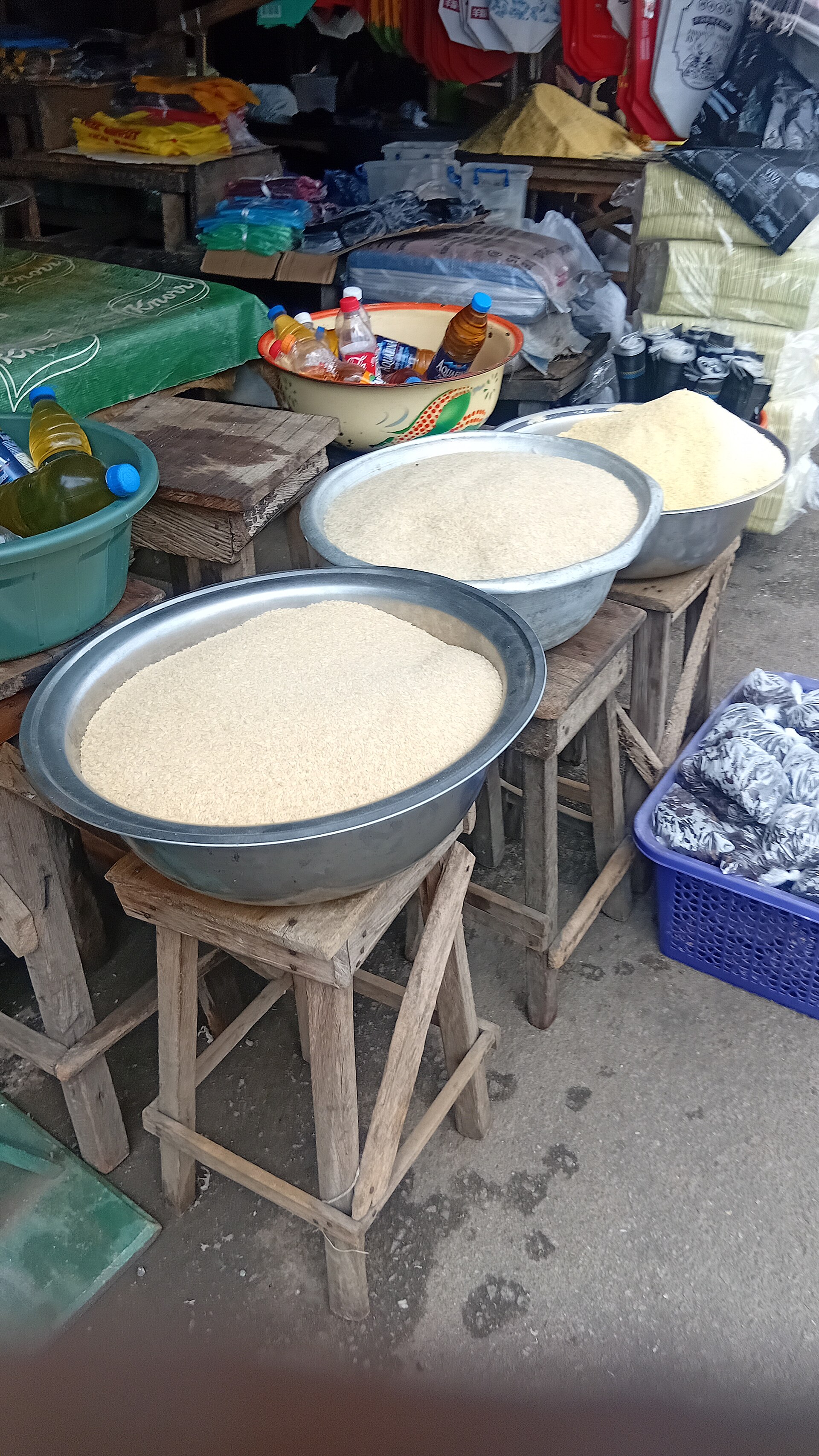
Garri at Ajah Market ran a clear round trip through the first half of 2026. A 50kg bag of white garri sold for N26,000 in the week of January 19, fell to N20,000 across the weeks of February 2 through February 23, and then climbed to N27,000 by the week of June 1. The June figure is the highest in the whole series, leaving the bag N7,000 above its February floor and N1,000 above where it started the year. For a staple that many Lagos households treat as a reliable fallback when rice climbs, that rebound is worth noting.
The paint bucket moved in the opposite direction to the bag, which is a useful reminder that retail and wholesale measures do not always march together. A paint bucket of white garri eased from N1,500 in January to N1,400 through February and N1,300 by June 1. Yellow garri showed a milder version of the bag pattern, with the 50kg bag holding at N20,000 through February before rising to N21,000 by June 1, while its paint bucket moved from N2,000 in the week of January 26 down to N1,400 in February and back to N1,600 by June.
The garri rebound sits inside a broader food market that the National Bureau of Statistics reported had turned higher again by April 2026, with food inflation at 16.06% year on year and garri named among the items whose average prices shifted over the period. Garri is milled from cassava, a crop grown widely across the south, so its price tends to track local processing and transport costs rather than the import dynamics that move rice.
The signal for buyers is that garri at Ajah is no longer the bargain it briefly was in February. Anyone who stocked a bag then locked in the low point of the year.
Live readings sit on the Ajah Market real-time prices page, and the movement can be traced on the historical prices tool.