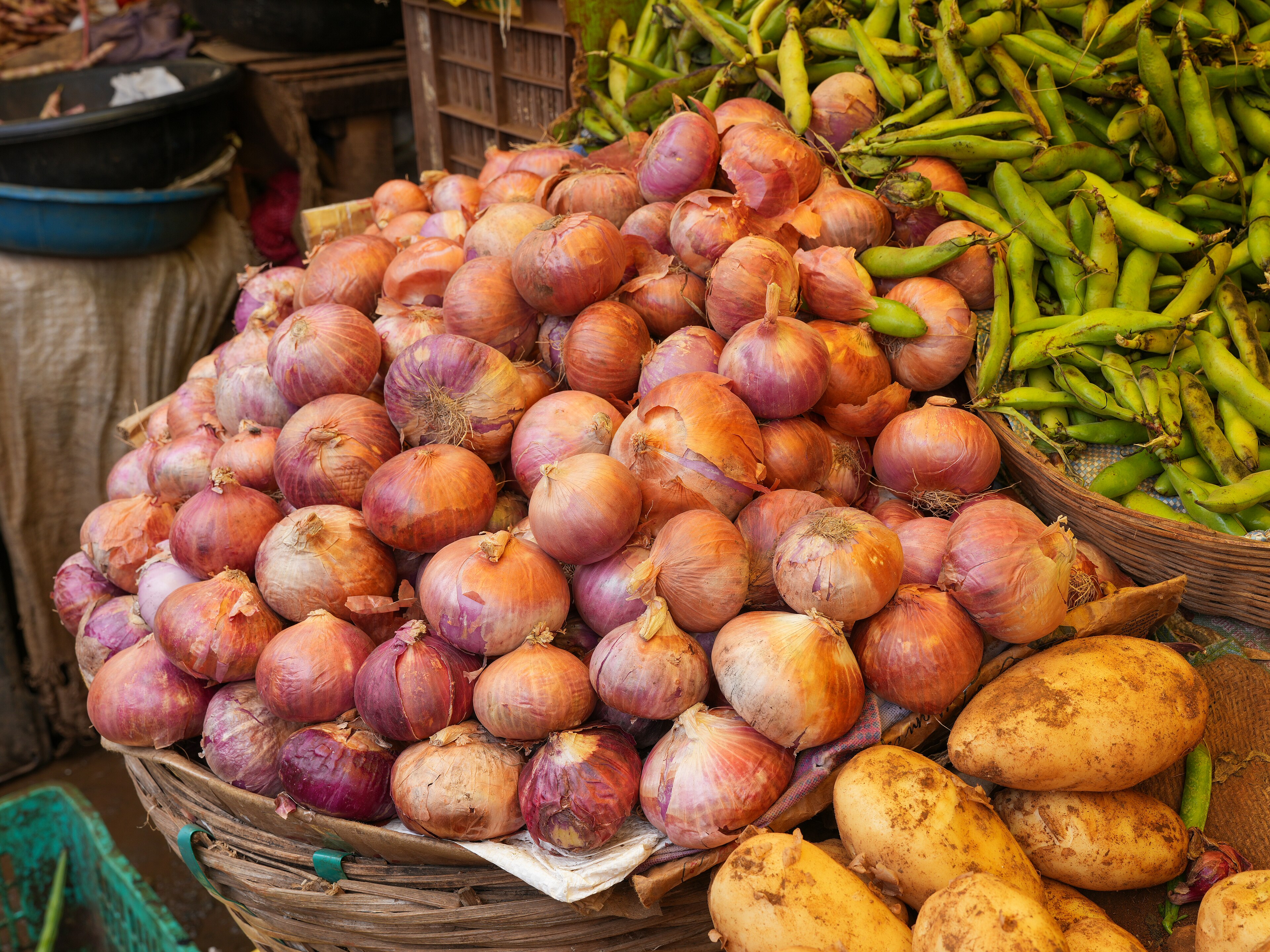
Fresh produce was where the sharpest moves landed at Ajah Market through the first quarter of 2026. A paint bucket of onions sold for N3,500 in the week of January 26 and reached N6,500 by the week of March 16, a rise of N3,000 or 85.7%. Tomatoes climbed alongside, with a paint moving from N4,000 in the week of February 2 to N6,000 by March 16, up 50.0%. A basket of tomatoes was recorded at N30,000 in early February. Pepper, tatashe and shombo all sat around N6,000 a paint by mid-March, a band that put the whole pepper-and-onion base of Nigerian cooking under pressure at once.
The tubers told a similar early-year story. A bunch of local plantain rose from N5,000 in the week of January 19 to N7,000 a week later, up 40.0%, while a tuber of local yam went from N4,000 to N5,000, up 25.0%. These are short two-week moves and are best read as early-year tightening rather than a settled trend.
On the vegetables, the trade view is that supply is sound and the pressure is logistical. The President of the National Onion Producers, Processors and Marketers Association told Vanguard in April that production was strong and dismissed scarcity fears, while the tomato growers' body pointed to transport and input costs rather than insecurity as the real driver. Tomato farmers separately warned Leadership that prices typically tighten heading into the May and June lean season, which fits the climb seen at Ajah by March.
The National Bureau of Statistics later reported that onions and tomatoes were both cheaper year on year by April 2026 even as monthly prices ticked up, a reminder that the early-year surge sat on top of a softer annual base.
Live readings sit on the Ajah Market real-time prices page, and shoppers can check current produce prices on the price check tool.