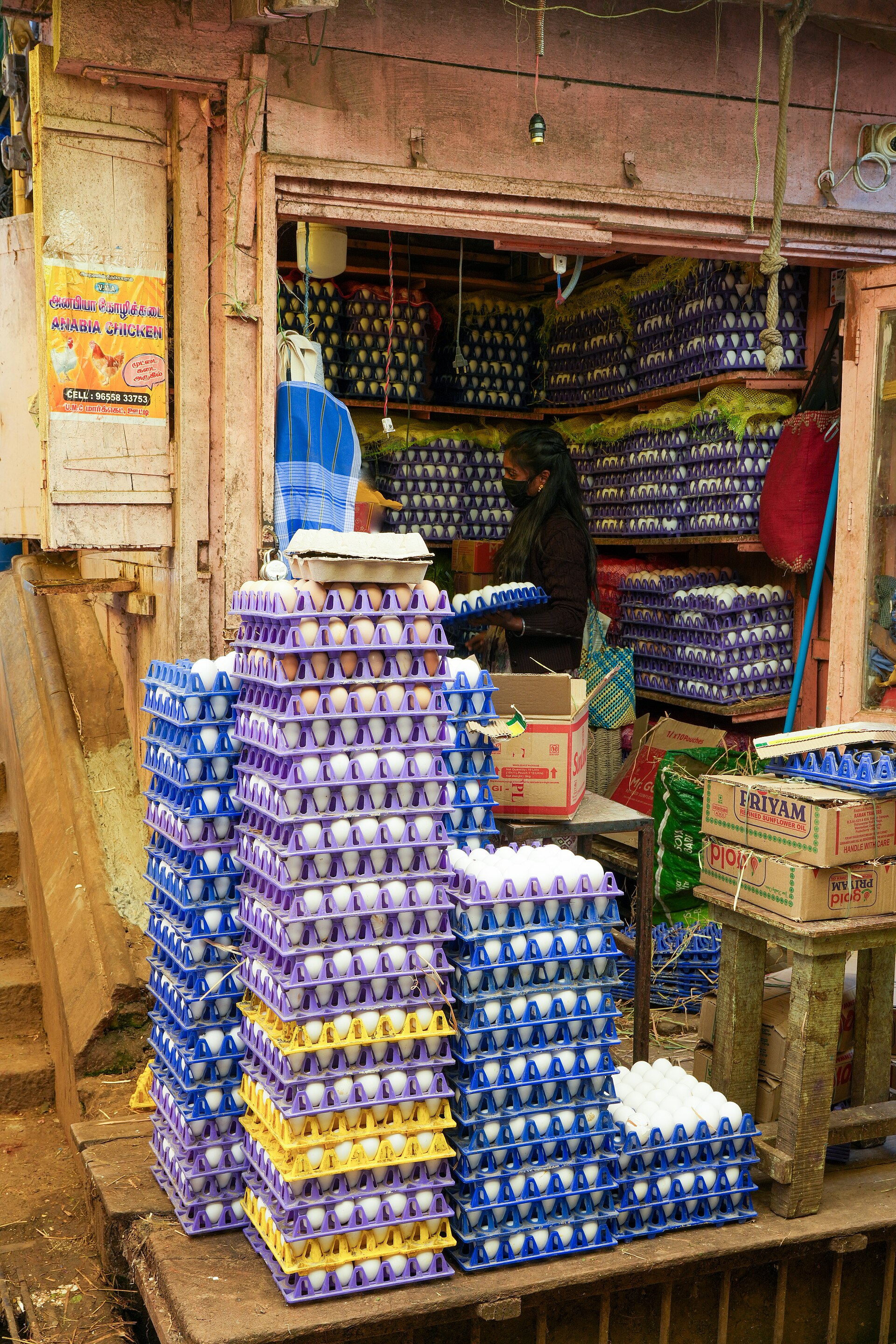
The protein shelf at Ajah Market in early 2026 showed eggs holding their place as the most affordable option. A crate of eggs was captured at N6,000 in the week of January 26, with a pack also at N6,000 the week before. Frozen chicken sat at N7,200 a kilogram by late January, having moved up from N7,000, while cow meat rose from N7,500 to N8,000 a kilogram over the same two weeks. Local mackerel was captured at N6,000 a kilogram and N3,000 a piece, and catfish held at N4,000 a piece.
These are largely single-window and early-year captures, so they are best read as a snapshot of the protein shelf rather than a trend. What they show is a market where animal protein clusters well above the staple carbohydrates, a gap that shapes how Lagos households build a plate.
The poultry economics behind the egg and chicken prices are well documented. The Poultry Association of Nigeria told The Guardian that while maize had fallen from N800 to N300 a kilogram and soya from N1,200 to N500, finished feed prices had not followed, keeping egg and chicken costs firm. The association described eggs as the country's most affordable protein and said prices would ease only once feed costs come down. The National Bureau of Statistics reported that a crate of eggs averaged N6,127.62 nationally in March 2026, down sharply year on year but up slightly month on month, a figure that lines up closely with the Ajah capture.
Live readings sit on the Ajah Market real-time prices page, and households can weigh protein options on the compare tool.