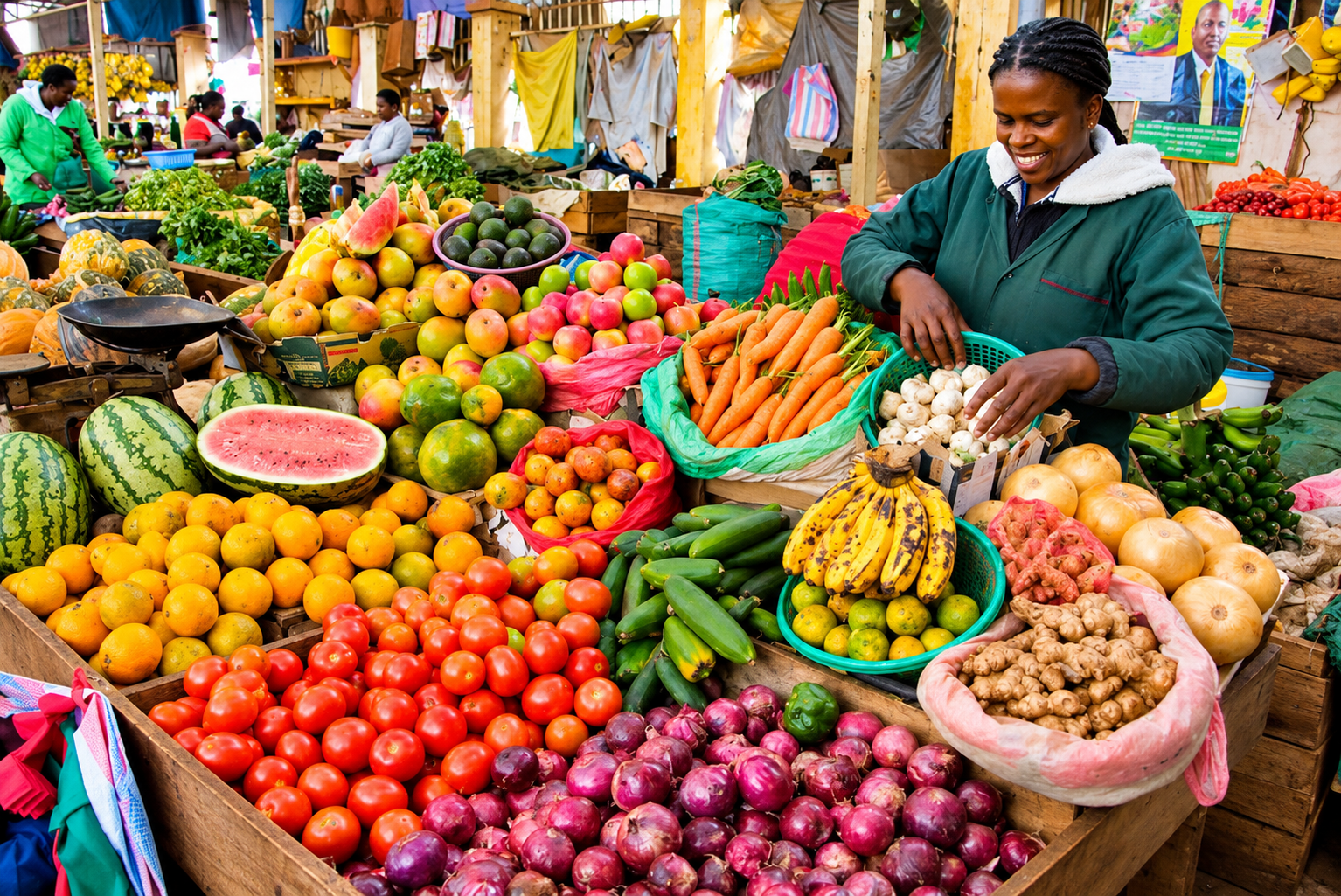
Africa's food business is increasingly being talked about not as a development problem but as a trillion-dollar opportunity, and Nigeria sits near the centre of that conversation. Industry organisers promoting a new continental food and agriculture award have pointed to Africa's ambition of building a $1 trillion food economy by 2030, framing the sector as a driver of jobs and investment, according to Vanguard.
More Than Farming
The case rests on how much the food economy now spans beyond the farm. Nigeria's food sector is creating opportunities through indigenous food brands, restaurants, food-technology startups, culinary businesses and export-oriented agribusinesses, according to Vanguard. Agriculture remains a heavyweight in the wider economy, contributing about 18.11 per cent to nominal gross domestic product in the first quarter of 2026, with crop production the largest driver, according to CNBC Africa. That mix of primary production and a growing layer of processing, branding and services is exactly what a trillion-dollar food economy would need.
The Gap Between Ambition and Imports
The ambition runs headlong into an uncomfortable reality. Africa spent a record $122.9 billion on agricultural imports in 2022, even though the continent holds close to two-thirds of the world's uncultivated arable land, according to The Guardian. Closing that gap means producing and processing far more at home, which is why recent capital commitments are being read as momentum. Backers of the food economy push have cited the Federal Government's recent $500 million agricultural investment fund as evidence of intent, according to Vanguard, a fund the Vice President said would channel money into aquaculture, palm oil and marine resources, according to CNBC Africa.
Why It Matters for Prices
A larger, more integrated food economy is not just an export story. More domestic processing, stronger brands and better logistics can shorten the distance between farm and plate, trim the post-harvest losses that inflate costs, and reduce reliance on imports that expose Nigerian shelves to currency swings. The same food inflation that reached 20.31 per cent year-on-year in July 2026, its highest in ten months, according to Nairametrics, is the clearest sign of how much room there is for a stronger domestic food economy to help.
Whether the trillion-dollar talk becomes cheaper, more reliable food is a question that gets answered at the market stall. FoodPrices Nigeria tracks verified retail prices across Lagos markets, the ground-level measure of whether Africa's food-economy ambitions reach ordinary shoppers.