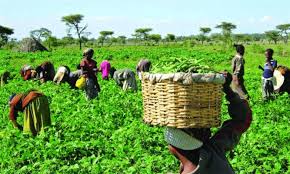
The African Development Bank Group has approved a $200 million loan to support climate-smart and technology-driven agriculture in Nigeria, in a development that could reshape the country's food production landscape and have meaningful implications for food prices in the medium term.
According to Nairametrics, the financing will fund the second phase of the Federal Government's National Agricultural Growth Scheme – Agro-Pocket (NAGS-AP), expanding access to quality inputs, modern technology, and data-driven farming practices across the country. The project is expected to run for four years beginning in March 2026.
The targets are ambitious: a fivefold increase in wheat output and a 20 per cent rise in rice production. If achieved, these gains would directly address two of Nigeria's most expensive food import categories. Nigeria currently spends roughly $2 billion annually on wheat imports alone, according to stakeholders cited in Independent Newspaper's agricultural sector outlook, making domestic production expansion a critical economic priority.
The loan builds on earlier support under the Bank's African Emergency Food Production Facility, which helped Nigeria respond to rising food insecurity pressures in recent years. Nairametrics reported that Phase I of the NAGS-AP delivered measurable results through an ICT-based input distribution system, with more than 600 agro-dealers nationwide supplying certified seeds, fertilisers, and crop protection products to farmers.
The new project will directly support five key programmes under Nigeria's National Agricultural Technology and Innovation Policy framework: improved input access, stronger value chains, revitalised extension services, digital agriculture, and enhanced data systems. The Bank noted that the initiative will target improved food security, enhanced productivity, and more resilient agricultural value chains.
This investment arrives at a critical moment. Agriculture remains central to Nigeria's economy, employing roughly 38 per cent of the workforce and contributing about a quarter of gross domestic product. However, the sector continues to face structural constraints that limit productivity and competitiveness, including limited access to improved seeds and fertilisers, weak land tenure systems, low irrigation coverage, and climate stress.
The Minister of State for Agriculture and Food Security, Senator Aliyu Abdullahi, speaking at the 2026 budget defence session in Abuja last week, acknowledged these challenges. According to Daily Post, he noted that despite prevailing financial constraints, Nigerian farmers have shown strong commitment to production, with government surveys indicating marginal increases in output. However, he acknowledged that about 30 per cent of the 2025 capital allocation — roughly ₦18 billion — remained unreleased, slowing programme execution.
The agriculture sector's contribution to GDP has been growing — increasing from 24.05 per cent in 2022 to 29.44 per cent in 2024, according to New Dawn Nigeria. Yet the sector's 2026 budget allocation of approximately ₦1 trillion, with only about ₦262 billion earmarked for capital expenditure at the federal ministry level, still falls short of the 10 per cent national budget threshold that Nigeria has committed to under the Maputo Declaration, as reported by Peoples Gazette.
Independent Newspaper also highlighted that authorities are targeting ₦160 billion in wheat output during the 2025/2026 dry season under the National Agricultural Growth Scheme, with irrigation expansion, youth-led agritech innovation, and agro-industrial processing zones identified as key opportunities for productivity improvements.
For consumers tracking food prices, this $200 million investment signals a medium-term push toward greater domestic supply of staple grains. Increased rice and wheat production — if the inputs reach smallholder farmers effectively and post-harvest infrastructure keeps pace — could help moderate prices for two of the most consumed staples in Nigerian households. At FoodPrices, we will be tracking whether this investment translates into measurable supply improvements and how that impacts market prices across our tracked categories.