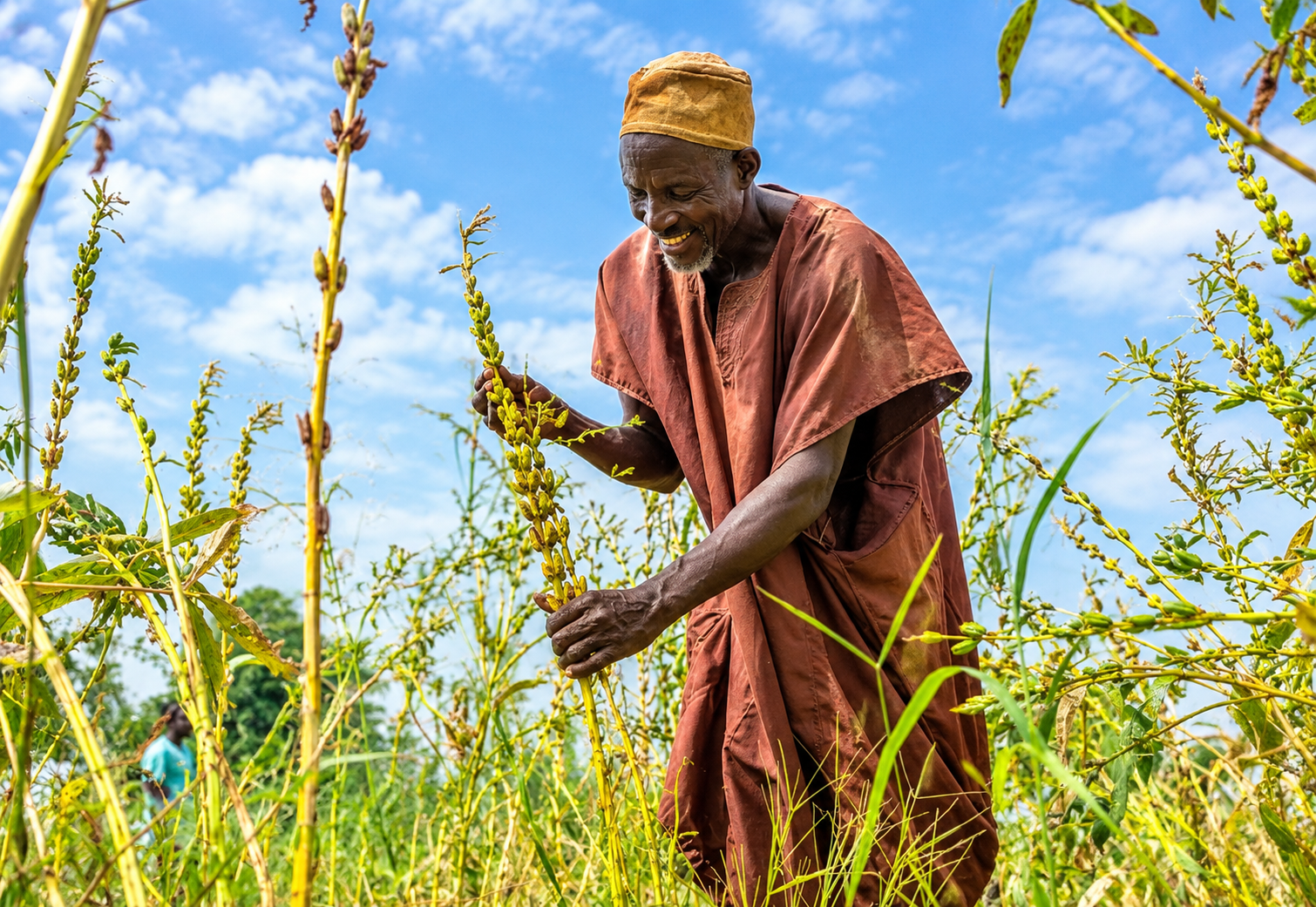
Kano has added a major piece of processing muscle to Nigeria's farm economy, commissioning a large plant that turns raw grain and sesame into export-ready products instead of leaving farmers to sell unprocessed seed. Vice President Kashim Shettima, represented by the Minister of Agriculture and Food Security, Abubakar Kyari, inaugurated the AFCOTT Grains facility, describing it as a statement of national resolve toward food sufficiency and agro-industrial transformation, according to the News Agency of Nigeria.
Built to Process, Built to Export
The plant is owned by AFCOTT Grains Ltd, a subsidiary of the Kewalram Chanrai Group, a company with a presence in Nigeria stretching back more than 150 years, according to The Guardian. It sits on a 4.12-hectare site, is designed to process 40,000 tonnes of sesame seeds and roughly 20,000 to 25,000 tonnes of other grains a year, and is expected to create more than 500 direct and indirect jobs, with at least 70 per cent of the workforce drawn from Kano State, the same report noted. The group's vice chairman, Navin Chanrai, said the investment is aimed at serving demanding international markets, including Japan and Europe, while lifting the value of Nigerian produce and generating foreign exchange, according to Agrocentric.
A Model for Value Addition
Shettima used the commissioning to press a wider argument, that food security depends on integrated industrial capacity where production is matched with processing, mechanisation with financing, and policy with private-sector confidence, according to BusinessDay. He described Kano as a model for creating an enabling business environment, and the government hailed the plant as a win for technology transfer, jobs and farmer incomes, according to Eagle Eyes. Governor Abba Kabir Yusuf reiterated the state's commitment to attracting local and international investors, pledging to expand opportunities across agriculture, according to BusinessDay.
Why Sesame Matters
Sesame is one of Nigeria's most valuable non-oil export crops, yet the country has long shipped much of it abroad as raw seed, capturing little of the value that crushing and cleaning would add. A plant sized to process tens of thousands of tonnes for buyers in Japan and Europe is a direct attempt to close that gap, keeping more of the margin, and the jobs, inside Nigeria, according to reporting on the commissioning by the News Agency of Nigeria and Agrocentric. The facility is also expected to reduce the post-harvest losses that erode farmer earnings, according to Agrocentric.
Processing capacity built close to where crops are grown is one of the surest ways to steady prices and incomes across the supply chain. FoodPrices Nigeria tracks verified retail prices across Lagos markets and follows the value-addition investments that shape what the wider food system costs.