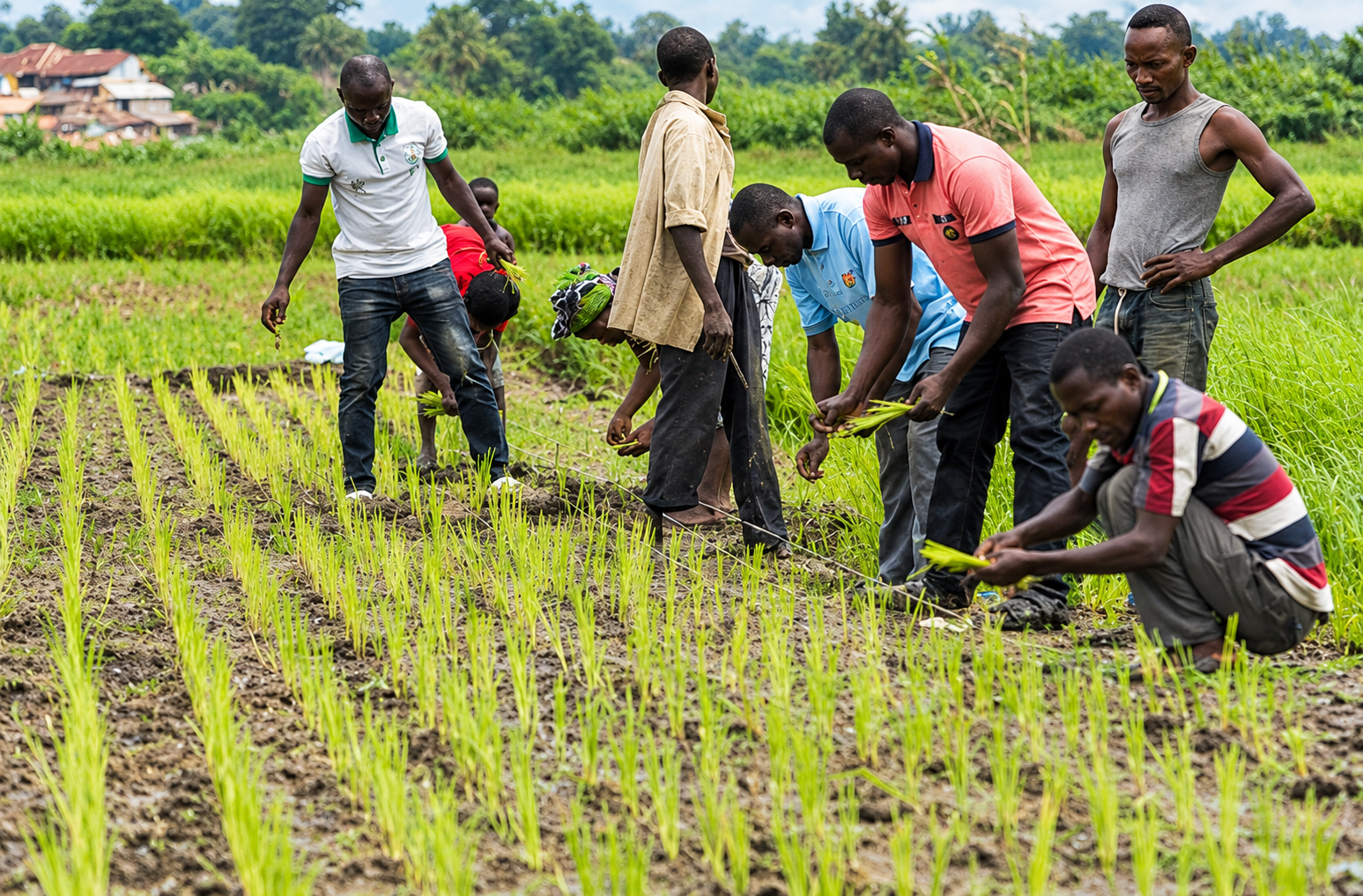
One of the quiet reasons Nigeria still cannot grow all the rice it eats lies in the seed farmers plant. A Community Rice Seed Production Project has been launched by the National Cereals Research Institute at Badeggi, in partnership with the National Agricultural Seed Council and the Federal Ministry of Agriculture and Food Security, to improve farmers' access to quality rice seed, according to Daily Trust.
Lead Farmers as Seed Hubs
The project has chosen 40 lead farmers, 20 from each of the two participating states, to spearhead the development of premium seed within their local communities, according to Daily Trust. It also arranged an extensive training programme covering optimal agronomic techniques, seed certification and the seed registration process, so that the farmers can multiply and supply trusted seed to their neighbours. The Director of the Agricultural Engineering Department and project coordinator at the institute, Dr Usman Aliyu, said the initiative is designed to enhance seed quality and lift farmers' productivity.
The Seed Problem It Targets
The stakes are high because poor seed quietly drains Nigerian rice yields. Limited access to quality and affordable seed continues to constrain productivity in major rice-growing areas, where high seed costs, weak last-mile distribution and the widespread reuse of paddy from previous harvests have contributed to yield losses of up to 50 per cent among smallholder farmers, according to the Food and Agriculture Organisation. A farmer who saves grain from last season's crop to plant again often ends up with weaker, lower-yielding rice.
Why Seed Underpins Self-Sufficiency
Fixing the seed system is central to Nigeria's long-running push for rice self-sufficiency. The African Development Bank has approved $200 million for the second phase of the National Agricultural Growth Scheme and Agro-Pocket, which aims to lift rice output by 20 per cent through improved, climate-resilient seed varieties and tailored fertiliser blends, according to the African Development Bank. Community seed schemes complement that by putting certified seed within reach of the smallholders who grow most of the country's rice.
Better seed means higher yields, more local paddy for millers and, over time, less pressure on the price of a staple that anchors millions of meals. FoodPrices Nigeria tracks verified rice prices across Lagos markets, where the payoff from a stronger seed system would eventually reach the shopper.