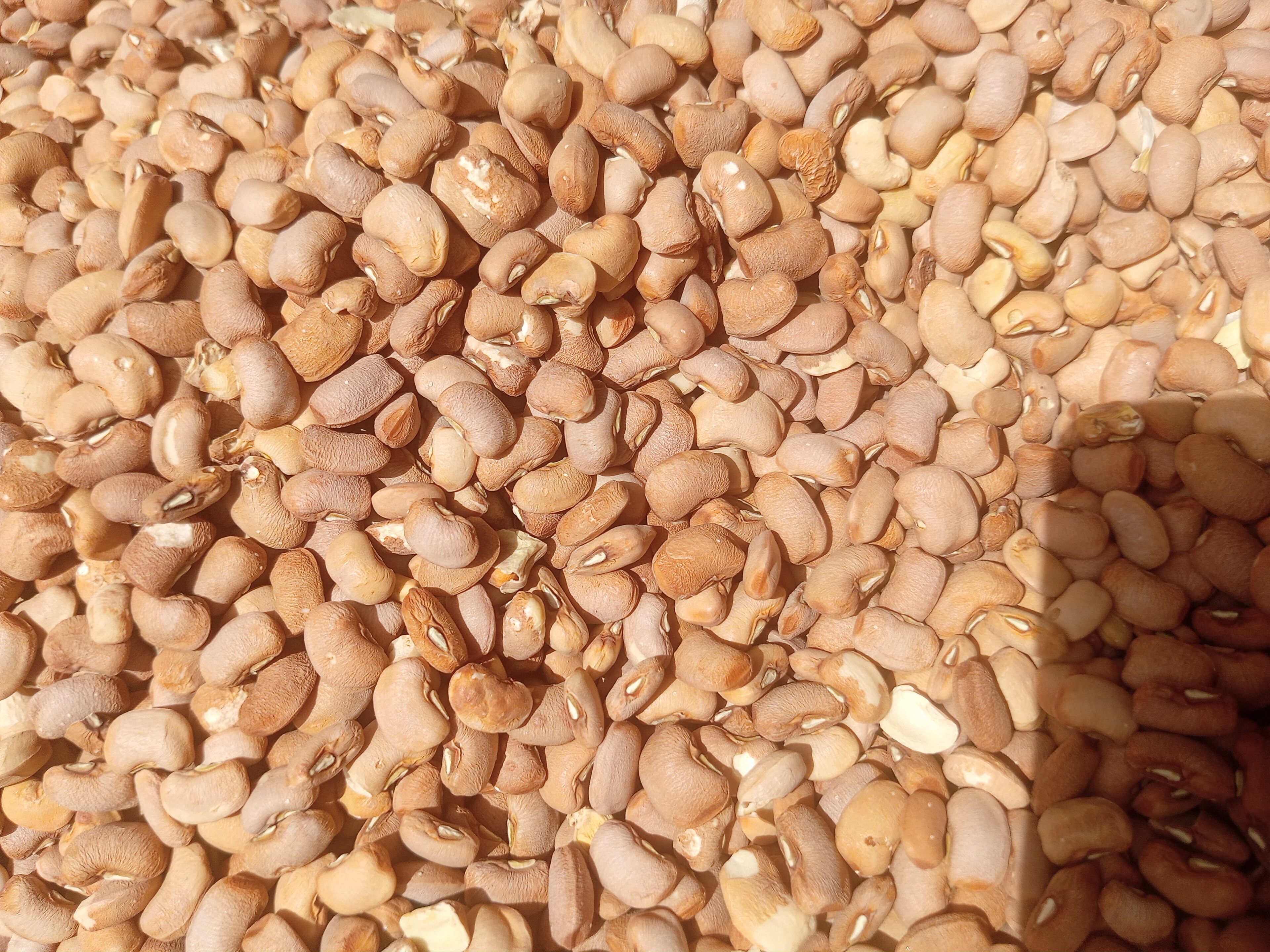
For households priced out of meat and fish, beans carry the protein load. That makes the spread on Oloyin beans a nutrition question rather than a shopping convenience. The Ministry of Agriculture and Food Systems market survey for the week of 17 July 2026 records Beans (Oloyin) at ₦3,500 per paint at Fresh Food Hub Mushin and ₦6,000 at Ajah Market, with a Lagos average of ₦4,820 across ten markets.
The Same Protein at Two Very Different Wage Costs
Nigeria's minimum wage is ₦70,000 a month. A paint at Ajah absorbs 8.6% of that wage. The same paint at Fresh Food Hub Mushin takes 5%. A household buying two paints a month spends 17.1% of a minimum wage on beans alone at the top of the market and 10% at the bottom, a difference of ₦5,000 that lands entirely on the protein line of the food budget. The Lagos average of ₦4,820 sits at 6.9% of the monthly wage per paint.
Where Every Market Falls
Mile 12 Market and Agbalata Market quote ₦4,200, then Agege Market at ₦4,500. Sabo Market Yaba and Mushin Market sit at ₦4,800, Ile-Epo Market at ₦5,000, Oyingbo Market at ₦5,500 and Epe Main Market at ₦5,700. The ₦2,500 spread makes the dearest paint 71% more expensive than the cheapest.
The Wage Itself Is Under Review
The denominator in those calculations may not hold. Politics Nigeria reported the Chief of Staff to the President, Femi Gbajabiamila, saying the ₦70,000 minimum wage introduced in 2024 no longer meets the practical economic demands facing citizens, and that a review was under consideration. That statement came in the same week the National Bureau of Statistics reported food inflation climbing to 17.52% while headline inflation eased to 15.91%, figures carried by Vanguard.
Protein Pressure Is a National Problem
The wider food security picture explains why beans pricing matters beyond Lagos. National Daily reported Famine Early Warning Systems Network projections of between 31.8 million and 35 million Nigerians facing acute food insecurity during the 2026 lean season, with cultivated area across northern farming communities down about 8% over the past year. The All Farmers Association of Nigeria told Leadership that input and labour costs had climbed through the season, in a report that also carried Food and Agriculture Organisation projections of about 35 million people facing acute hunger between June and August.
Supply Has Improved, but Not Evenly
Against that pressure sits a genuine harvest recovery. The Cowpea and Beans Farmers, Processors and Marketers Association of Nigeria told the News Agency of Nigeria, in reporting carried by Punch and Nairametrics, that better yields had brought a 100kg bag down to between ₦80,000 and ₦120,000 from ₦210,000 to ₦240,000 a year earlier. The Lagos data reflects that easing. The average fell 2.0% from ₦4,920 in the prior survey and stands 8.2% below the 9 January figure of ₦5,250, though it remains 6.2% above where it sat four weeks ago.
Ajah Market is the only market on the Ajah and Lekki axis reporting an Oloyin price this week, and its ₦6,000 stands 28% above the mainland average of ₦4,689. Beans (Drum) averaged ₦4,322 per paint in the same survey, 11.5% below Oloyin. The Derica Is the Fallback
Households that cannot raise a paint price buy by the cup instead. The same survey week put Oloyin beans at a Lagos average of ₦1,062 per derica, and traders have described the shift directly. Reporting from Lagos markets by Punch quoted a beans seller saying weak purchasing power had pushed many buyers to purchase in cups rather than larger measures. The paint spread therefore understates the pressure, because the households facing it hardest have already stopped buying at that scale.
FoodPrices Nigeria will keep tracking what protein costs across the network. Live prices: foodprices.ng/real-time-prices