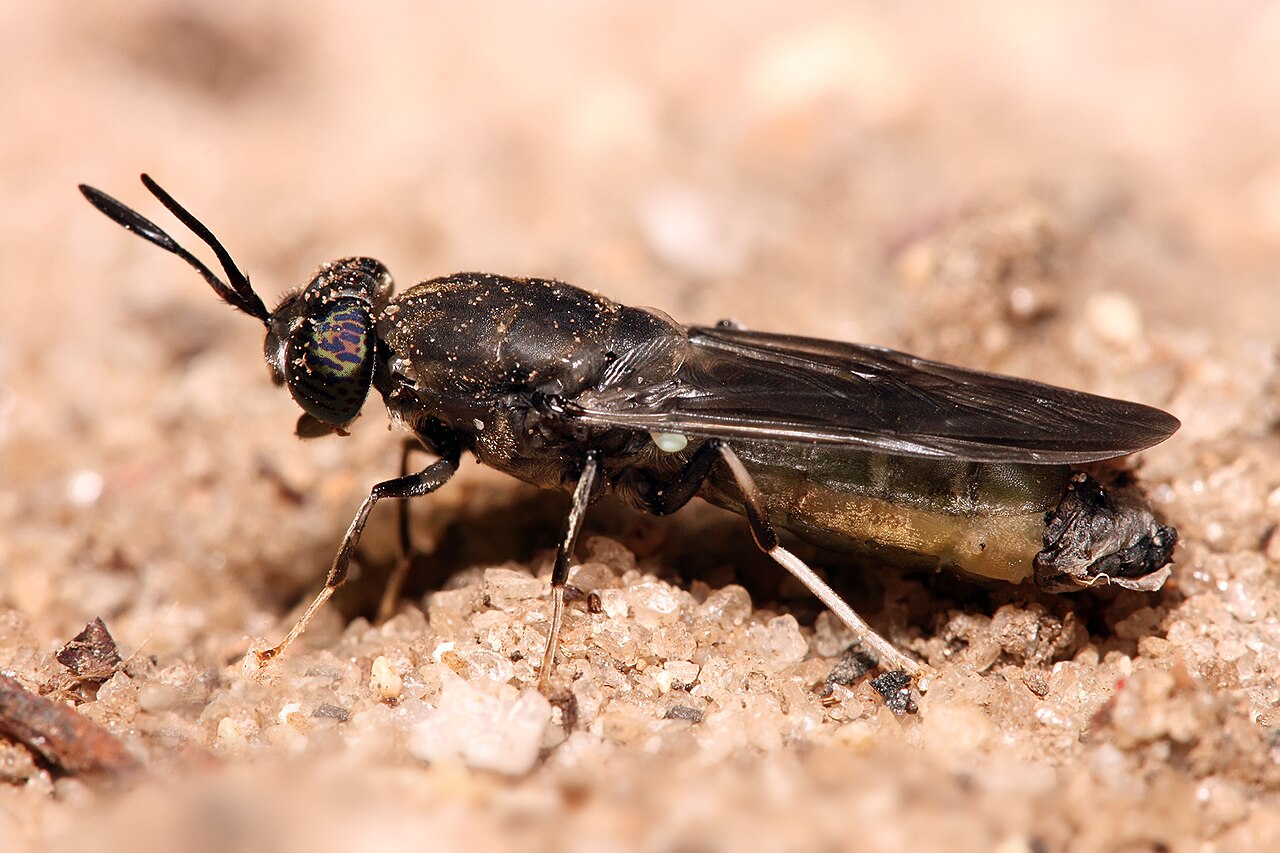
Feed is where Nigerian livestock farmers bleed money. It makes up the largest single cost of raising poultry and fish, and the prices of the main protein ingredients keep climbing. A small, harmless insect is now being pitched as a way out. At the 9th Africa Agriculture Science Week in Abuja, scientists presented a method of turning organic waste into protein-rich animal feed using black soldier fly larvae, an innovation described as more than an alternative ingredient, according to Leadership.
Waste In, Protein Out
The process is strikingly simple. The larvae feed on restaurant leftovers, market waste and agro-industrial by-products, are harvested within 14 to 21 days, and are then processed into protein meal for fish, poultry and pigs, according to Leadership, which noted the same process also yields insect oil and organic fertiliser. That circular model, converting waste streams into animal protein and fat, has been studied for years as a bioconversion technology that tackles waste management and feed supply at the same time, according to research published by Frontiers.
Cheaper Than Soy and Fishmeal
The economics are what make farmers listen. With the cost of soybean, fishmeal and other protein sources rising, insect farming offers a cheaper, nutrient-dense substitute, with insects containing between 50 and 80 per cent protein, richer than both fishmeal and soybean, according to Agriculture Nigeria. Because feed dominates the cost of animal production, with poultry alone absorbing close to 45 per cent of all feed produced globally, any ingredient that undercuts imported protein has an outsized effect on the final price of eggs, chicken and farmed fish, according to a review in Springer Nature.
From Lab to Farm
Insect protein is moving from novelty to mainstream. It is gaining recognition as a sustainable feed source, with black soldier fly larvae among the most promising options for their nutritional value and production scalability, according to Feed & Additive Magazine. The remaining hurdles are regulatory approval for wider use in livestock diets and the capital to scale production, but the potential prize, described at the Abuja science week as an integrated business producing animal protein, oil and fertiliser from waste, is exactly what a feed-starved sector needs, according to Leadership.
Cheaper feed is one of the surest routes to cheaper eggs, chicken and fish. FoodPrices Nigeria tracks verified retail prices across Lagos markets, where the cost of raising an animal eventually lands on the price of protein.
#BlackSoldierFly, #AnimalFeed, #Poultry, #Aquaculture, #CircularEconomy, #Nigeria, #Lagos, #FoodPrices, #Agriculture, #FoodSecurity