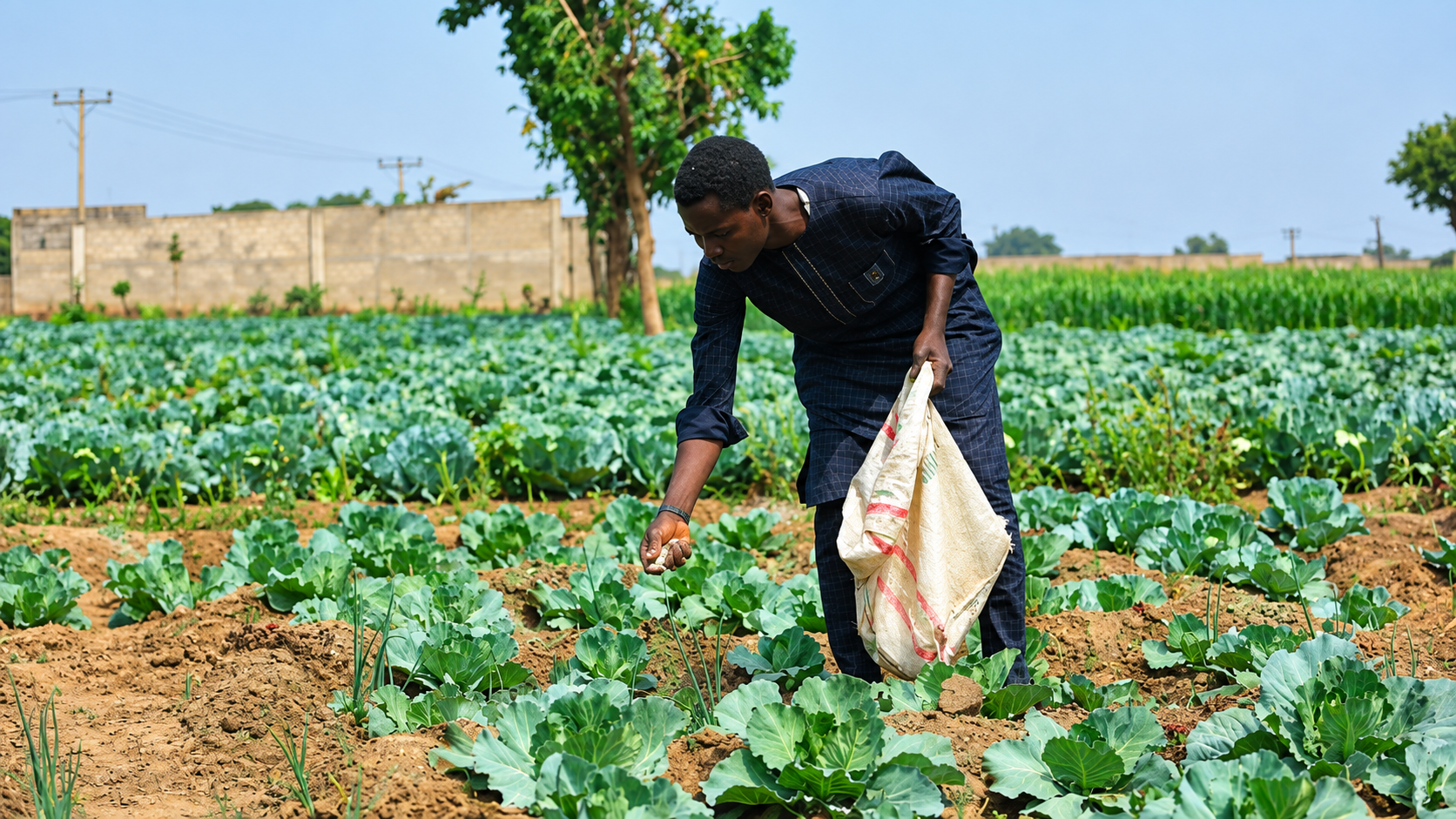
Nigeria has moved to fix one of the oldest problems in its farm economy, the struggle to get enough affordable fertiliser to the right farmers at the right time. The Federal Ministry of Agriculture and Food Security has signed a Memorandum of Understanding with the International Fertilizer Development Center aimed at improving farmers' access to fertiliser, strengthening food security and speeding up the transformation of the sector, according to Leadership.
What the Deal Covers
The agreement targets the core constraints holding back smallholder productivity, namely fertiliser affordability, accessibility and timely distribution, according to Voice of Nigeria. Under the partnership, the ministry and IFDC will work to strengthen fertiliser supply systems, expand soil testing and balanced nutrient management, and promote private-sector-led distribution networks across the country, according to Business Post. The signing ceremony in Abuja brought together the ministry's Permanent Secretary, Marcus Olaniyi Ogunbiyi, and the IFDC Executive Director, Bayella Thiam, according to the Federal Ministry of Information and National Orientation.
Fertiliser as the Make-or-Break Input
Ogunbiyi described fertiliser as indispensable for raising crop yields and farm productivity, noting that while farmers value machinery, tools and finance, it is often the availability and affordability of fertiliser that decides whether a season succeeds or fails, according to Business Post. He said the partnership would support ongoing efforts to improve accessibility, strengthen soil fertility management and promote sustainable practices nationwide, and urged IFDC and other stakeholders to build impactful programmes from the agreement, according to Voice of Nigeria.
Closing a Costly Gap
The deal is designed to narrow the distance between Nigeria's fertiliser production capacity and the amount that actually reaches farms, a gap that has left many smallholders under-fertilising their fields despite the country's growing blending capacity, according to reporting on the ministry's statement by Naija News Break. The emphasis on soil testing and balanced nutrient management also points beyond simply moving more bags, toward matching the right nutrients to the right soils, an approach the ministry links to its broader food-sovereignty goals, according to the Federal Ministry of Information and National Orientation.
Whether cheaper, better-targeted fertiliser reaches the farm eventually shows up in harvest size, and harvest size in prices. FoodPrices Nigeria tracks verified retail prices across Lagos markets, the practical measure of whether input reforms translate into steadier food costs.