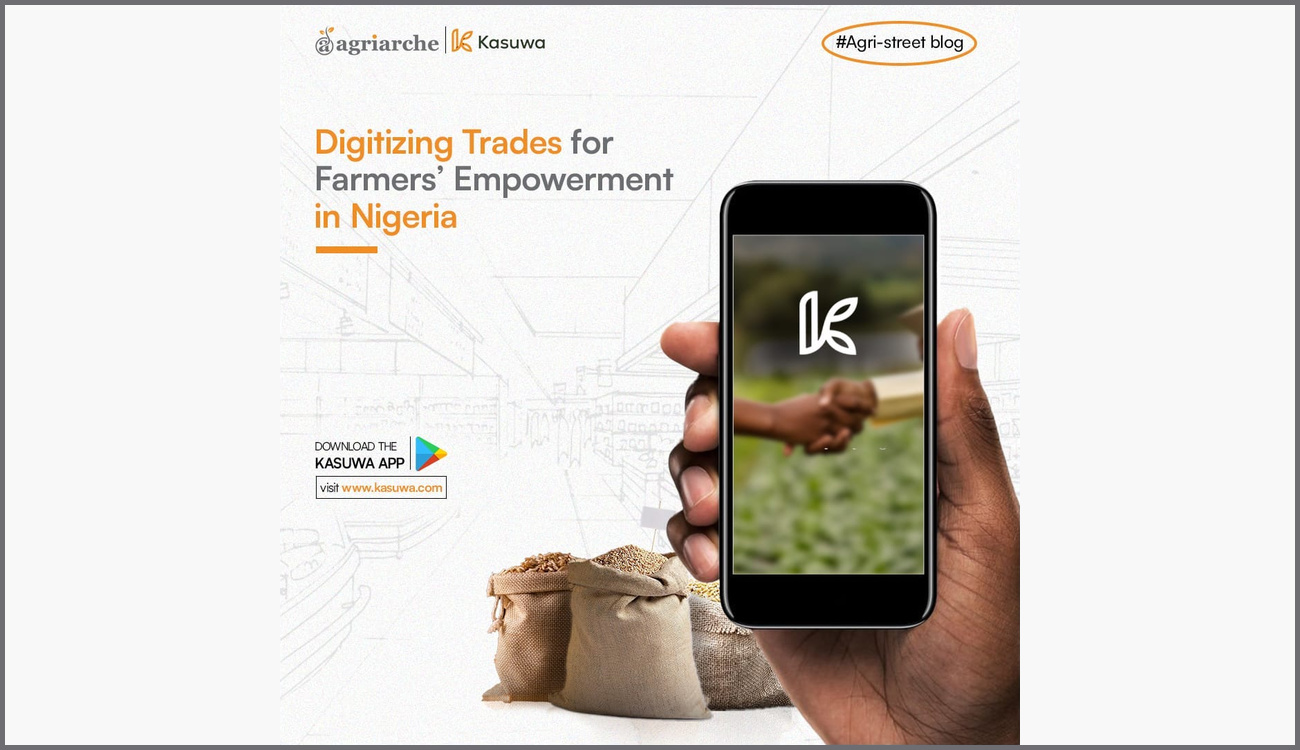
Nigerian agriculture technology, long overshadowed by the country's flashier fintech scene, is starting to attract real money, and one supply-chain startup has just shown what that looks like. Agriarche, which connects more than 25,000 smallholder farmers and 3,000 commodity agents across nine northern states through its Kasuwa app, won $1.8 million in catalytic funding, ranking among the busiest fundraisers of the year relative to its size, according to Startup Map Africa.
Why Market Access Is the Prize
The app tackles a problem that quietly drains farmer incomes, the gap between a harvest and a reliable buyer. Sub-Saharan Africa loses between 20 and 40 per cent of its crops after harvest, and platforms that link farmers directly to markets, agents and finance aim to shrink that waste while getting growers a fairer price, according to Startup Map Africa. Much of this year's Nigerian agritech money went to hardware that fights spoilage, with solar-freezer maker Koolboks raising $1.5 million, off-grid cooling firm Eja-Ice taking $1 million and clean-cookstove maker Powerstove drawing $1.3 million, the same analysis noted.
A Sector Playing Catch-Up
The capital is welcome because agritech has trailed other tech sectors for years. Nigeria was home to about 230 agritech startups in 2024, up sharply from just 23 in 2022, yet agritech across Africa raised only about $65 million that year, a fraction of what fintech attracts, according to Techpoint Africa. Analysts have described the imbalance as a clear gap between agriculture's importance to the economy and the level of investment it receives, as African Farming reported. There are signs of momentum, with Nigerian agritech startups raising more than $100 million in venture funding across 2024 and 2025, spanning drone-based crop monitoring and solar-powered tools, according to CNBC Africa.
From App to Table
The bet behind platforms like Kasuwa is that better information and market links can lift both yields and prices for farmers while cutting the losses that make food dearer for everyone else. If digital marketplaces can move more of the harvest from farm to buyer before it spoils, the savings ripple through the supply chain toward the consumer.
Post-harvest losses and weak market links are among the hidden reasons food costs more than it should. FoodPrices Nigeria tracks verified retail prices across Lagos markets and follows the technology and investment that could tighten the link between what farmers grow and what shoppers pay.
#Agritech, #Agriarche, #Startups, #Funding, #Nigeria, #Lagos, #FoodPrices, #Agriculture, #PostHarvestLoss, #Farmers