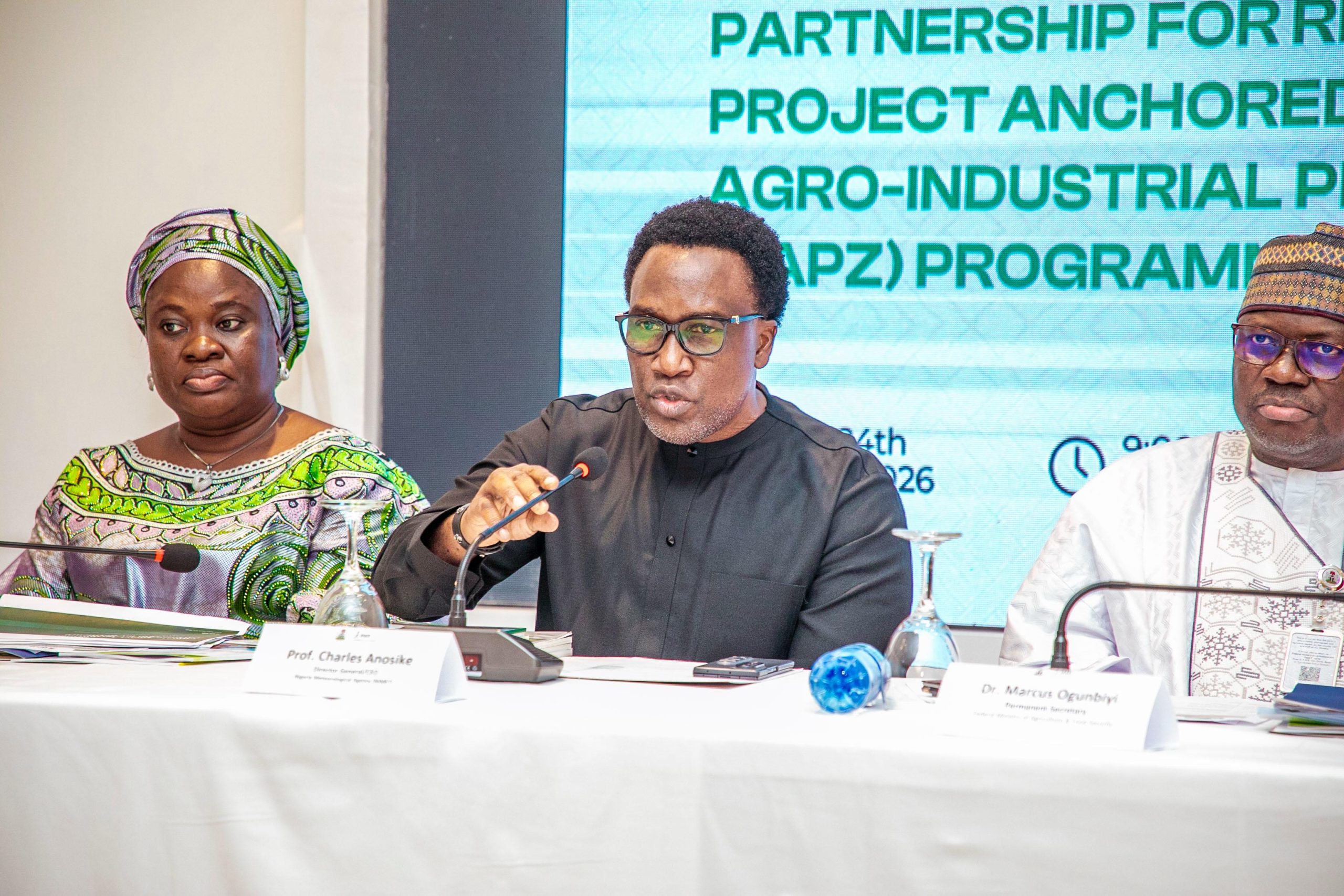
Nigeria is trying to turn weather forecasting from a public afterthought into a working tool on the farm. The Federal Government and the International Fund for Agricultural Development have launched the Climate-Smart Agribusiness Partnership for Resilience, or CSAPR, a project designed to embed climate intelligence into the business of farming, according to The Guardian.
What CSAPR Is
Financed by the Gates Foundation and executed by IFAD, the project runs from 2026 to 2028 and is implemented by the Federal Ministry of Agriculture and Food Security through the Special Agro-Industrial Processing Zones programme, in partnership with the Nigerian Meteorological Agency, according to AgroNigeria. Its core idea is to integrate Climate Information Services into commercially viable, private-sector-led agribusiness products and services delivered through public-private partnerships, as Nigerian NewsDirect reported. The scheme was formally launched in Abuja on July 24, 2026, according to EnviroNews.
Why Now
The launch comes as climate shocks batter the food system. The Permanent Secretary of the Federal Ministry of Agriculture and Food Security, Dr Marcus Ogunbiyi, said floods, droughts, irregular rainfall, desertification and rising temperatures continue to threaten production and livelihoods, and that strengthening resilience is no longer optional, according to Vanguard. CSAPR is the third climate adaptation intervention in Nigeria supported by IFAD's Global Adaptation for Smallholder Agriculture Programme, after earlier projects in the North-East, North-West and North-Central regions, according to Tribune Online.
How It Is Meant to Work
The project treats climate data as something farmers and agribusinesses will pay for because it earns its keep. The IFAD Country Director, Dede Ekoue, said the aim is to build the business case for climate information services through partnerships that embed them in agricultural finance, insurance, extension, input supply and market information, according to MSME Africa. Early work is already visible, with automated weather stations installed in Ogun and Kano states, the same report noted. The project is designed to advance the National Agricultural Technology and Innovation Policy, the Comprehensive Africa Agriculture Development Programme and the government's strategic partnership with IFAD, according to Tribune Online.
Better forecasts mean fewer failed plantings, smaller losses and steadier supply, which eventually shows up in the price of food. FoodPrices Nigeria tracks verified retail prices across Lagos markets and will watch whether climate intelligence reaches the field in time to matter.
#CSAPR, #ClimateSmart, #IFAD, #Agriculture, #FoodSecurity, #Nigeria, #Lagos, #FoodPrices, #NiMet, #Resilience