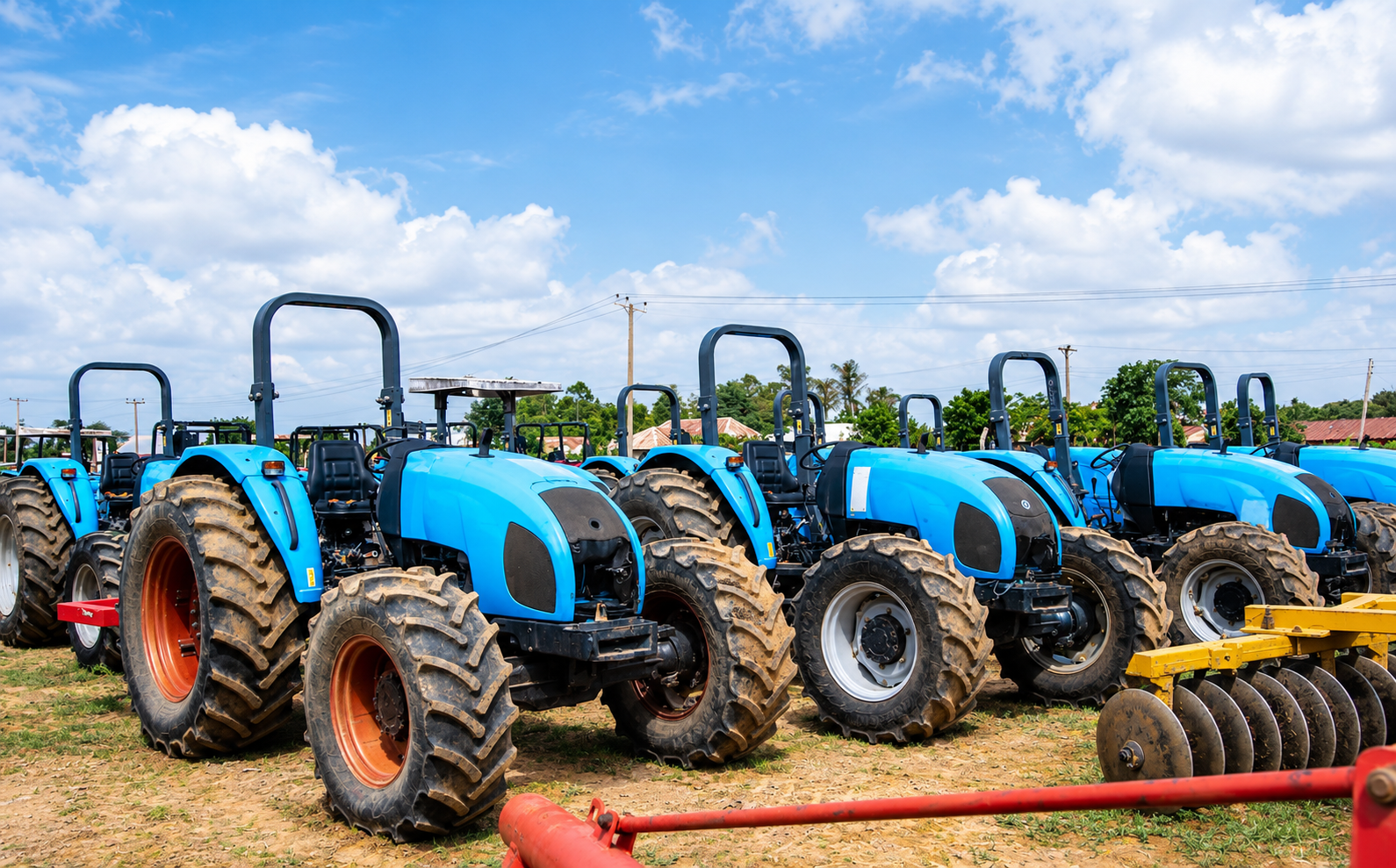
A private investment platform has been launched in Abuja to put 250,000 tractors on Nigerian farms within five years. The Mechanisation Investment Facility was flagged off by TracTrac Mechanisation Services Limited, The Guardian reported on 1 October 2026.
How Far Behind Nigeria Is
The size of the gap explains the target. Nigeria has seven tractors per 100 square kilometres, against a global benchmark of 195, which puts the country at 3.6% of that standard. About 90% of farming in Nigeria is still manual.
Reaching 250,000 tractors in five years would mean adding an average of 50,000 a year. The facility also aims to expand the capacity of 500,000 mechanisation service providers and to establish 10 agricultural equipment assembly plants.
Finance, Not Demand, Is the Problem
The promoters argue that the gap will not close through donations. "The mechanisation gap in the country cannot be closed if the subsector is being treated as development aid," said Godson Ohuruogu, Chief Executive Officer of TracTrac Mechanisation Services Limited.
Jemimah Jennifer Justus, the company's Investment and Asset Management Lead, said service providers "don't lack demand; they lack access to the right finance." The National Secretary of the Tractor Owners and Hiring Association of Nigeria made the same point: "The problem they are facing is high interest rates by commercial banks; they need friendlier financing with lower rates and longer repayment periods."
Tribune also reported the launch. The event included a ₦1 million pitch challenge for young Nigerians building mechanisation solutions.
Why It Matters for Food Prices
A farmer working by hand can only plant and harvest as much land as a family can manage, and delays at planting or harvest cost yield. Machines let the same farmer cover more land on time. More output from the same farms is the most direct route to steadier supply and lower prices in the market.
FoodPrices Nigeria tracks food prices across Lagos markets and will follow whether wider mechanisation shows up in the supply reaching the city.