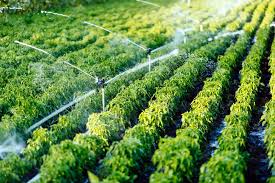
Less than one percent of Nigeria’s farmland is irrigated. In a country where agriculture employs over a third of the population and contributes roughly a quarter of GDP, nearly all food production depends entirely on rainfall — making every planting season a gamble against increasingly erratic weather, according to the World Bank.
The Federal Government is now taking concrete steps to change that calculation in northern Nigeria. According to the Federal Ministry of Information and National Orientation (February 4, 2026), the Minister of Water Resources and Sanitation, Professor Joseph Utsev, flagged off the Bela Dam Project in Bichi Local Government Area of Kano State on February 3, 2026. The multipurpose earth dam, with a storage capacity of 775,000 cubic metres, is designed to support irrigation, domestic water supply, fisheries, and livestock production while also addressing chronic flooding in the area.
Separately, as reported by Newsworth Magazine (February 2026), the Minister launched a capacity-building programme in Jahun Local Government Area of Jigawa State, training 500 youths in modern drip irrigation technology. Utsev described the occasion as a “dual celebration” — combining critical drainage and erosion control infrastructure with human capital investment.
The opportunity is enormous. BusinessDay (February 2026) reported that Kano State possesses at least 22 dams, many of which already support dry-season irrigation, but industry experts say much of their economic potential remains untapped. According to a 2024 analysis published in ResearchGate, optimising dam releases across Kano’s major reservoirs — without stressing them to failure — could irrigate an additional 90,000 hectares and generate economic returns approaching ₦550 billion annually. Tiga and Challawa Gorge reservoirs alone hold over 3.3 billion cubic metres of water, according to the Islamic Development Bank.
The World Bank-supported TRIMING programme has already demonstrated what is possible. TRIMING expanded irrigated farmland to over 15,000 hectares under the Kano River Irrigation Scheme, producing enough food to sustain one million people. Farmers who previously struggled with single rainy-season harvests now cultivate year-round, growing rice, tomatoes, wheat, peppers, and vegetables during what was formerly an unproductive dry season.
BusinessDay further noted that with over 70 percent of Nigeria’s population under 30 and youth unemployment remaining a persistent structural challenge, connecting young Nigerians to irrigated agriculture represents a viable livelihood pathway. Several of the state’s dams can sustain fisheries, creating jobs not only for fishers but also for processors, transporters, and traders.
For food prices, the implications are straightforward: year-round irrigation reduces the seasonal supply shortages that drive price spikes. Tomatoes, for example, can swing from ₦4,000 per basket during peak harvest to ₦30,000 or more during lean months — a volatility that irrigated production can substantially moderate.